Introduction
A die casting quote is easier to evaluate when the project is separated into fixed costs, variable production costs, and customer-specific downstream costs. Two suppliers can quote different prices for the same drawing because they may use different tooling concepts, cavity counts, machine assumptions, material yields, machining routes, inspection scopes, or order-volume assumptions. Instead of asking for one universal “price per part,” buyers should build a project-level cost model.
This article explains how to calculate the economics of a custom die casting project without confusing tooling price with recurring part price. The focus is on quotation analysis, cost allocation, and purchasing decisions rather than general die casting process theory.
Internal Link Plan
- Die Casting Services
- Die Casting Guide
- CNC Machining Services
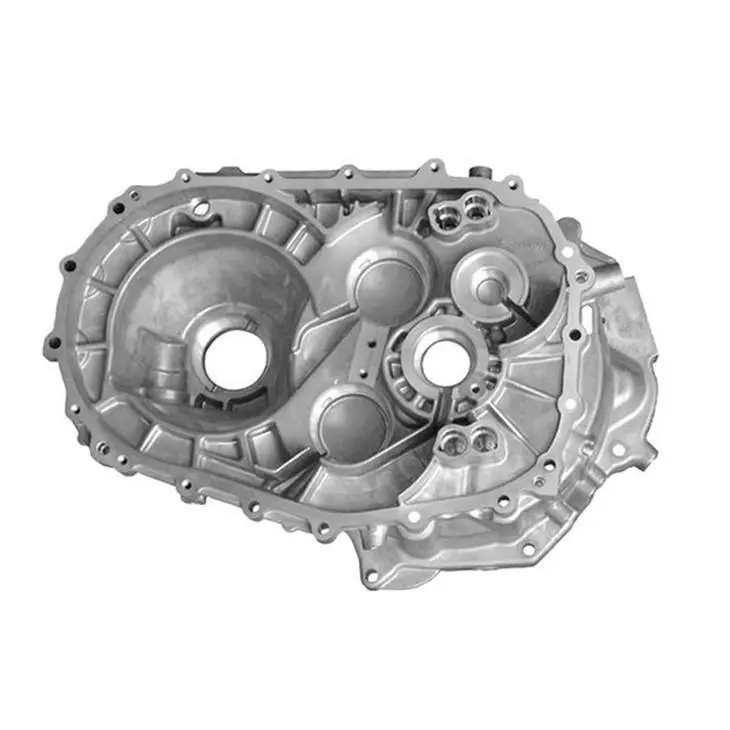
- A380 Transmission Housing Case
- Reduce Die Casting Costs Through Part Design
1. Start With the Right Cost Structure
A practical model is:
Total project cost = tooling + sampling/trials + production castings + secondary machining + finishing + inspection + packaging + freight and other agreed charges.
For unit economics:
Effective unit cost = (fixed project costs + variable production costs for the order) / order quantity.
Tooling can either be shown as a separate upfront investment or amortized over an expected production volume. These two presentation methods can produce very different-looking unit prices while representing the same economics.
2. Separate Tooling From Production
Die casting molds are usually a front-loaded investment. Mold cost depends on part geometry, die size, cavity arrangement, slides, cores, cooling, ejection, steel, machining and expected production requirements.
Do not use this article to estimate a generic mold price. Instead, treat the tooling quotation as one line in the project model. If a supplier quotes a mold separately, ask what is included: design, steel, CNC, EDM, heat treatment, assembly, trial shots, sample inspection and modifications.
For a deeper discussion of tooling price, link this page to the existing XINXIU article “How Much Does a Die Casting Mold Cost?” so the two pages answer different questions.
3. Calculate Material Consumption Correctly
The finished part weight is not always the same as purchased alloy consumption. The process can include runners, gates, overflows and other metal that may be recycled.
A simplified material model is:
Material cost per good part = (net casting weight + process metal − recoverable scrap value) × alloy cost per kg ÷ good parts produced.
The important variable is yield. A lightweight part with a large runner system can consume more metal per accepted component than its finished weight suggests.
4. Estimate Machine Cost From Cycle Time
Machine cost is influenced by machine size, cycle time, utilization, automation and labor requirements. A useful internal model is:
Machine cost per part = machine hourly rate × cycle time in hours ÷ good parts per cycle.
Cavity count matters here because two or four parts may be produced during one cycle. Cycle time should include die closing, injection, intensification, cooling, opening, ejection and handling.
Do not assume that a larger machine is automatically more expensive on a per-part basis. A larger machine may support a larger or more productive mold, while an undersized machine may create process limitations.
5. Include Scrap and Yield
Quotation comparisons should use good-part economics rather than theoretical shot output. Scrap can come from startup, unstable process conditions, trimming issues, dimensional rejection, cosmetic rejection, porosity or other customer-specific requirements.
A useful purchasing question is not simply “What is your scrap rate?” but “What yield assumption is included in this quotation, and how is scrap treated in the material calculation?”
6. Add CNC Machining Only Where Required
Many die castings are near-net-shape components. Critical holes, bearing seats, sealing faces, threads, mounting surfaces and datums may need CNC machining.
Separate the machining cost from the casting cost. CNC price can be influenced by number of setups, fixture design, tool access, tolerance, machining allowance, tool life, inspection and cycle time.
A quote becomes easier to compare when the supplier identifies which features are cast and which are machined.
7. Calculate Surface Finishing and Inspection
Deburring, shot blasting, polishing, powder coating, anodizing, plating or painting can materially change the landed cost. Cosmetic requirements may also increase process control even when no special coating is requested.
Inspection should be tied to function. Basic dimensional inspection, CMM measurement, leak testing, X-ray inspection and material verification have different costs. If two suppliers quote different inspection scopes, their prices are not directly comparable.
8. Volume Changes the Economics
Fixed costs become less important as volume increases.
Example:
Tooling = $8,000
Engineering/trial cost = $1,000
Recurring production cost = $4.20 per accepted part
At 1,000 parts:
($8,000 + $1,000) / 1,000 + $4.20 = $13.20 per part before other charges.
At 50,000 parts:
($8,000 + $1,000) / 50,000 + $4.20 = $4.38 per part before other charges.
This example is only a cost-model illustration, not a market quotation. It shows why buyers should compare total project cost at the actual forecast volume.
9. Compare Quotes on the Same Basis
Before selecting a supplier, normalize:
- drawing revision
- alloy grade
- net part weight
- cavity count
- machine concept
- tooling scope
- sample quantity
- machining operations
- surface treatment
- inspection requirements
- packaging
- delivery terms
- freight and taxes, where applicable.
A low unit price can be misleading if another quotation includes CNC machining, leak testing, packaging or a larger sample program.
10. Cost Drivers Buyers Can Influence
The strongest cost decisions often happen before tooling:
- production quantity and forecast
- part weight
- cavity strategy
- required tolerances
- amount of CNC machining
- surface finish
- cosmetic zones
- inspection plan
- tooling life requirement.
This is where the companion article on cost reduction through part design becomes useful. That page should focus on design changes rather than repeat the cost-calculation model.
11. A Buyer-Side Quote Worksheet
Ask the supplier to provide, where commercially appropriate:
Tooling / Engineering / Trial / Casting / Material / Scrap-yield assumption / CNC / Finishing / Inspection / Packaging / Freight.
If the supplier cannot separate every internal cost, at least ask for a clear scope of what is included in the quoted unit price.
12. When the Cheapest Quote Is Not the Lowest Cost
A cheaper mold can require more maintenance. A lower casting price can exclude machining. A lower unit price can assume a larger volume than the first purchase. A cheaper finishing route can fail the appearance requirement.
The correct decision is therefore total cost of ownership and project risk, not the lowest isolated number.
Conclusion
Calculating die casting cost is mainly an exercise in defining scope and separating fixed from variable costs. Tooling, material yield, machine time, cavity output, machining, finishing, inspection and volume all affect the result. Buyers who compare quotations using the same technical assumptions can make a more reliable purchasing decision and identify where design or process changes will create real savings.
FAQ: How is die casting cost calculated?
It is normally built from tooling, material and casting cost, yield, secondary machining, finishing, inspection, packaging and other agreed charges. Production volume determines how fixed tooling cost is distributed.
FAQ: Is die casting cheaper than CNC machining?
For suitable production volumes and complex metal geometry, die casting can reduce material removal and machining time. CNC may still be better for prototypes or very low quantities.
FAQ: Does cavity count affect unit cost?
Yes. More cavities can increase output per cycle, but the mold may cost more and require different machine capacity. The economic effect should be calculated from good parts per hour.
FAQ: Why do two die casting suppliers quote different prices?
They may use different tool designs, alloys, yield assumptions, cavity counts, machine rates, machining scopes, inspection requirements or delivery terms.
FAQ: What should I send for a die casting quotation?
A 3D CAD model, 2D drawing if available, alloy, quantity, critical dimensions, surface treatment and special inspection or leak-test requirements are useful starting information.