
1. What Is Die Casting?
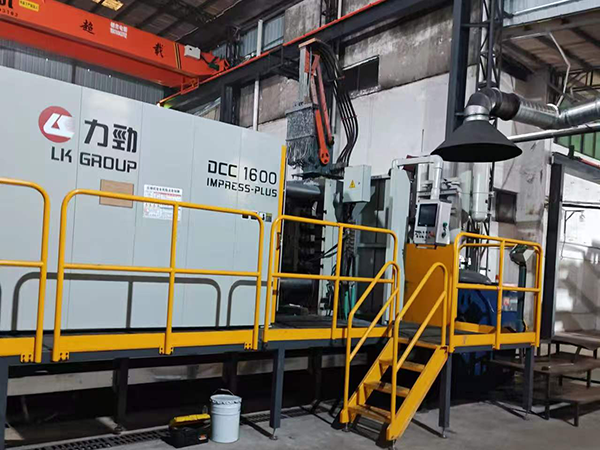
Die casting is a metal manufacturing process in which molten metal is injected into a reusable steel mold under controlled pressure.
The mold cavity defines the basic geometry of the component, while the injection system controls how quickly the molten metal enters and fills the cavity. Once the metal solidifies, the mold opens and the casting is ejected.
Compared with many conventional casting methods, die casting is particularly suitable for components that require complex geometries, repeatable dimensions, good surface appearance, relatively uniform walls, high-volume production, integrated features and consistent part-to-part quality.
The final result depends on the interaction between the part design, die casting mold, alloy and process parameters rather than on the casting machine alone.
At XINXIU, die casting projects can be supported through engineering review, mold design, mold manufacturing, die casting, CNC machining, surface treatment and quality inspection.
2. How Does the Die Casting Process Work?
A typical custom die casting project involves several connected stages.
Step 1: Product Design
The project starts with a 3D CAD model and, when available, a 2D engineering drawing. Engineers need to understand required dimensions, wall thickness, functional surfaces, tolerances, material and finishing requirements.
Step 2: DFM Review
Before manufacturing the mold, the part is reviewed for manufacturability. The DFM process may examine wall thickness, draft angles, parting line, gate position, runner layout, overflow locations, venting, cooling, ejection, machining allowances and potential porosity areas.
Step 3: Die Casting Mold Design
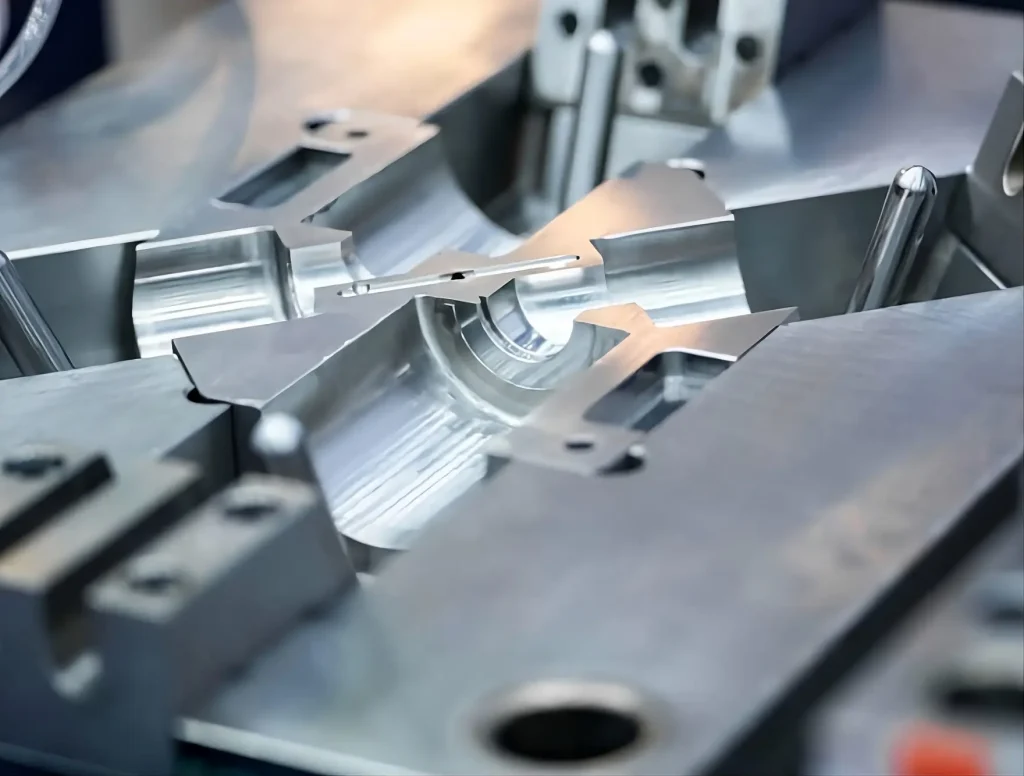
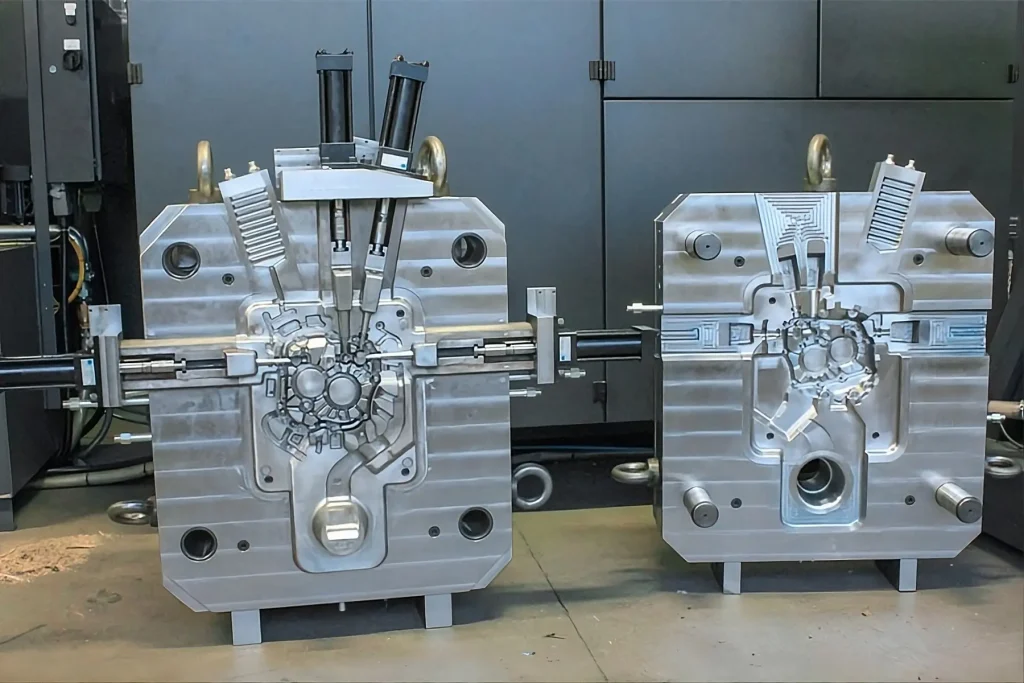
The mold is designed around the geometry and production requirements of the part. It may include cavity and core, runner system, gates, overflow areas, vents, cooling channels, ejector system, slides and inserts.
Step 4: Mold Manufacturing
The die casting mold is manufactured and inspected according to the approved design. Dimensional accuracy, mold alignment, parting surfaces, cooling channels, ejector components and other critical features should be checked before production.
Step 5: Mold Trial and Process Optimization
A mold trial allows the engineering team to evaluate filling, surface quality, dimensions, ejection and other process characteristics. Parameters can then be adjusted according to the actual mold, alloy, machine and component geometry.
Step 6: Die Casting Production
Molten alloy is injected into the mold under controlled process conditions. The casting solidifies inside the cavity before the mold opens and the component is removed.
Step 7: Post-Processing
Depending on the application, die-cast parts may require trimming, deburring, CNC machining, surface treatment, leak testing or dimensional inspection.
3.Key Elements of DFM Analysis
Structural Optimization: Evaluate wall thickness distribution; recommend uniform wall thickness to prevent sink marks caused by abrupt changes in thickness. Propose thinning or rib reinforcement solutions for thick-walled areas, and assess stiffness and fill feasibility for thin-walled areas.
Gating System: Determine the optimal gate location through mold flow analysis; design runners, gates, and overflow channels (sprue pockets) to ensure balanced filling and smooth venting.
Parting Line Design: Select appropriate parting line locations and evaluate parting line tolerances to prevent excessive flash from affecting product quality.
Machining Allowance: Recommend a minimum machining allowance of 0.25 mm (0.010 inches) to avoid penetrating the casting’s surface dense layer; the maximum machining allowance is determined based on the casting’s deformation.
Draft Angles: Check draft angles on all surfaces; internal surfaces should have twice the draft angle of external surfaces to ensure smooth demolding and prevent scratches or mold jamming. Standard tolerances should be calculated using the formula; precision tolerances should not be used unless necessary.
Filleting: Convert sharp corners to fillets to reduce metal flow turbulence, eliminate stress concentrations, and improve mold life and casting strength.
Undercut Evaluation: Identify undercut features and recommend redesign to avoid side core pulling, or assess the feasibility of slider mechanisms to balance mold cost and production cycle.
Fine Features: Identify fine features in the product (dimensions or tolerances less than 0.5 mm), evaluate machinability, and propose recommendations for relaxed tolerances or structural adjustments to avoid unnecessary mold costs and manufacturing difficulties.
Pressure Sealing Requirements: Evaluate the pressure sealing requirements of the casting. Recommend uniform wall thickness, avoid sharp corners and edges, and optimize the gating system to reduce air entrapment. For products with high pressure sealing requirements, recommend vacuum die casting to ensure the casting meets pressure testing standards.
4. Die Casting Materials: Aluminum, Zinc and Magnesium
Material selection is an important part of die casting design.
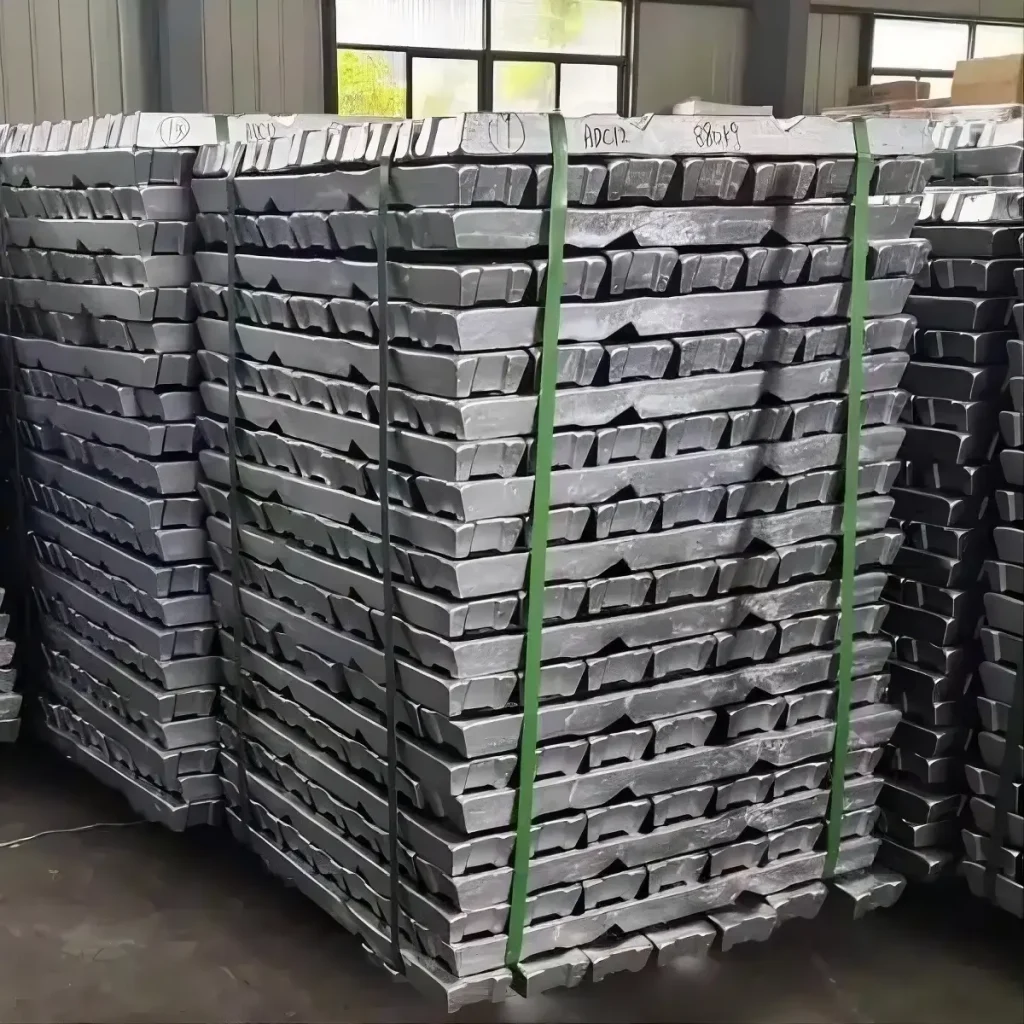
XINXIU supports die casting projects using aluminum, magnesium and zinc alloys. The appropriate material depends on the component’s mechanical, dimensional, weight, surface and application requirements.
Aluminum Die Casting
Aluminum alloys are widely used when customers require a combination of relatively low weight, mechanical performance and corrosion resistance. Typical applications can include automotive components, industrial housings, machinery components, electronics enclosures and functional parts.
Zinc Die Casting
Zinc alloys can be suitable for components requiring good dimensional repeatability, detailed features and surface quality. Applications may include hardware components, electronic parts, automotive components, consumer products and precision housings.
Magnesium Die Casting
Magnesium alloys are useful when weight reduction is an important consideration. They can be considered for applications where lightweight metal construction is required while maintaining the functional characteristics of a metal component.
The final alloy should always be selected according to the actual application rather than simply choosing a material based on cost.
5. Key Die Casting Process Parameters
Mold Temperature
Mold temperature affects metal flow, filling behavior, solidification and thermal stress. If the mold is too cold, the metal can lose heat too quickly. If it is too hot, solidification can become slower and the production cycle may increase. The appropriate temperature depends on the alloy, mold design, part geometry and cooling system.
Molten Metal Temperature
The temperature of the molten alloy affects fluidity and filling performance. Increasing the temperature can improve flow in some situations, but excessive temperature may increase oxidation, gas-related problems, mold erosion or soldering. Process temperature should be established according to the selected alloy and actual production conditions.
Injection Speed
Injection speed determines how quickly molten metal moves through the shot system and into the cavity. A suitable filling speed can help achieve complete cavity filling while controlling turbulence and gas entrapment. If injection speed is too low, the metal may begin to solidify before filling is complete. If it is too high, turbulent flow, air entrapment, oxide inclusions and mold erosion may become more likely.
Injection Pressure
Injection pressure provides the force needed to fill and pack the mold cavity. The required pressure depends on part geometry, alloy, gate design, machine capacity, mold design and required part quality. Higher pressure does not automatically mean better casting quality.
6. Die Casting Mold Design Considerations
The die casting mold has a direct influence on part quality, cycle time and mold life. A properly designed mold needs to consider the entire metal-flow and cooling process rather than only the final shape of the component.
Important elements include:
Parting Line — determines how the mold opens and can affect flash, ejection and appearance.
Gate Design — influences how molten metal enters the cavity.
Runner System — guides molten metal from the injection system toward the gates.
Overflow Design — provides additional space for displaced material, air and oxides during filling.
Venting — allows air and gases to escape from the cavity.
Cooling Channels — help control mold temperature and solidification.
Ejection System — removes the casting without excessive deformation or damage.
Slides and Cores — support undercuts and complex internal features.
7. Why Die Casting DFM Matters Before Tooling
Design for Manufacturing (DFM) is one of the most important stages before making a die casting mold.
A DFM review helps identify potential manufacturing problems before they become tooling problems. Engineers can review wall thickness, draft angles, parting lines, gate locations, runner design, overflow positions, venting, cooling, ejection, machining allowances, dimensional requirements and potential porosity locations.
For example, sudden changes in wall thickness can create differences in cooling and solidification. Sharp corners can increase stress concentration. Difficult-to-machine features may also increase secondary machining requirements.
By identifying these issues during the design stage, customers can reduce the possibility of expensive mold modifications later.
XINXIU provides DFM and mold-flow analysis as part of its die casting engineering process.
8. Common Die Casting Defects and How to Prevent Them
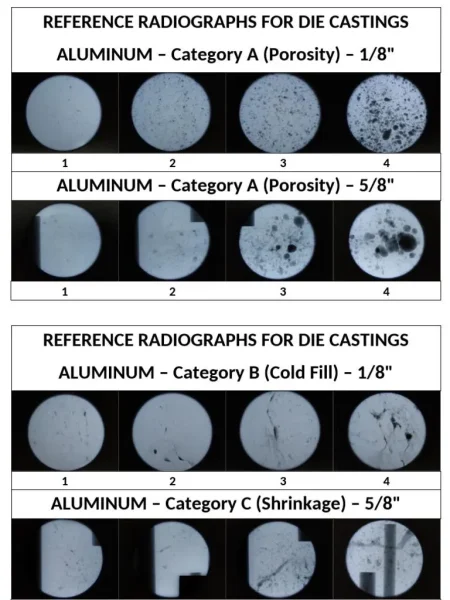
Common die casting defects include incomplete filling, cold shuts, porosity, shrinkage, cracks, flash, deformation, flow marks, soldering, surface imperfections and inclusions.
The cause of a defect is not always a single parameter. Mold design, alloy condition and production settings may interact with each other.
9. Incomplete Filling
Incomplete filling, also called a short shot or misrun, occurs when molten metal does not completely fill the mold cavity.
Potential causes include low mold temperature, low metal temperature, incorrect injection speed, insufficient pressure, poor gate design, inadequate venting, unsuitable wall thickness and difficult part geometry.
Possible solutions include optimizing mold and metal temperatures, adjusting injection conditions, reviewing gate design and improving venting.
10. Cold Shut
A cold shut occurs when two metal flow fronts meet without properly fusing. It can be related to insufficient metal temperature, unsuitable filling conditions, poor gate or runner design and oxide contamination.
Engineering solutions may include reviewing the filling pattern, adjusting process temperatures, improving gate and runner design and controlling molten-metal quality.
11. Porosity in Die Casting: Causes and Solutions
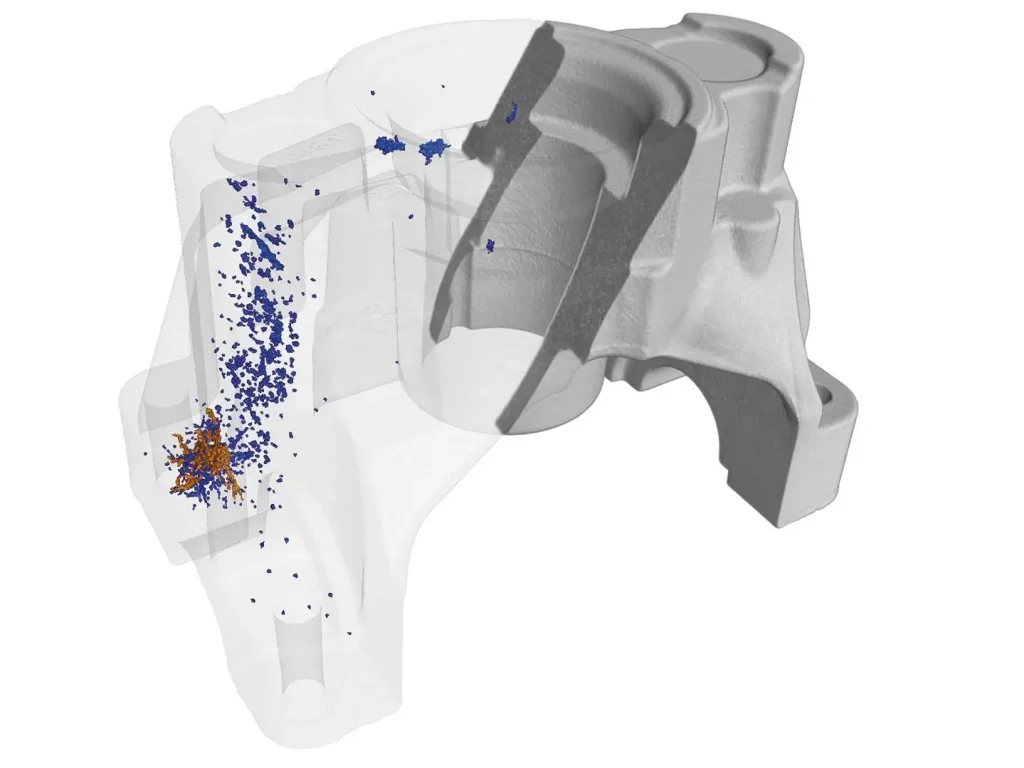
Porosity is one of the most important quality concerns in die casting, particularly for components requiring airtightness, pressure resistance, structural performance or machining of critical areas.
Gas porosity may result from air trapped inside the cavity, process gases or gas contained within the molten metal.
Potential contributing factors include poor venting, excessive turbulence, incorrect injection parameters, excessive release-agent application, gas contained in the alloy and poor control of recycled material.
How Can Die Casting Porosity Be Reduced?
1. Review gate and runner design.
2. Improve overflow and venting design.
3. Adjust injection speed and filling time.
4. Control release-agent application.
5. Improve molten-metal quality.
6. Review mold temperature.
7. Consider vacuum die casting for suitable applications.
8. Use X-ray inspection when internal quality is critical.
XINXIU’s stated quality-control capabilities include X-ray inspection and material spectroscopy for applicable die-cast components.
12. Shrinkage and Shrinkage Porosity
Shrinkage occurs when metal contracts during solidification. The risk can increase when a component has significant differences in wall thickness or localized areas that remain hot for longer periods.
Potential solutions include improving wall-thickness consistency, optimizing cooling, reviewing gate location, adjusting injection conditions, improving feeding of thicker sections and reviewing overflow and vent locations.
Good thermal management begins during mold design rather than after production problems appear.
13. Cracks in Die Cast Parts
Cracks can be associated with uneven shrinkage, thermal stress, improper ejection, unsuitable geometry or mold assembly problems.
Features that may increase risk include sharp corners, sudden wall-thickness changes, high internal stress, poor cooling balance and incorrect ejection locations.
Possible design improvements include increasing fillet radii, reducing abrupt wall-thickness transitions and reviewing cooling and ejection conditions.
14. Flash and Excess Material
Flash is excess metal that enters gaps between mold components or around the parting line.
Typical causes include insufficient clamping force, mold misalignment, excessive pressure, worn parting surfaces and poor fitting of inserts or slides.
Corrective measures can include inspecting the mold assembly, improving parting-surface fit, reviewing injection pressure and repairing worn mold components.
15. Mold Venting and Gas Management
Effective venting is essential for controlling trapped air and gases. When the cavity cannot release air efficiently, internal gas-related defects can occur.
Venting should therefore be considered during mold design rather than treated only as a production adjustment.
For demanding applications, additional vacuum technology may be considered when appropriate. XINXIU describes vacuum die casting as part of its available die casting solutions for suitable applications.
16. Cooling and Thermal Balance in Die Casting
Cooling has a direct relationship with solidification and dimensional stability. Uneven cooling can create differences in solidification time, shrinkage, thermal stress, part deformation and dimensional stability.
A cooling strategy should therefore be considered during mold design. Engineers may need to pay particular attention to thick sections, heat-concentrated areas and regions where dimensional requirements are critical.
17. Die Casting Quality Control and Inspection
Quality control should cover the complete manufacturing process instead of relying only on final inspection.
Material Inspection: Check the alloy and incoming material against project requirements.
Mold Inspection: Check cavity dimensions, parting surfaces, slides, cores, ejector pins, cooling channels and vents.
Process Control: Monitor mold temperature, metal temperature, injection speed, pressure and timing.
Dimensional Inspection: Check critical dimensions using appropriate measuring equipment.
X-Ray Inspection: For suitable applications, X-ray inspection can help identify internal porosity, shrinkage and other internal conditions.
Material Analysis: Spectroscopy can be used to verify alloy composition and material consistency.
XINXIU states that its die casting quality-control capabilities include material spectroscopy, X-ray inspection, leak testing and dimensional inspection for applicable projects.
18. CNC Machining After Die Casting
Die casting can produce complex near-net-shape components, but some applications still require secondary CNC machining.
CNC machining may be used to achieve tighter dimensional requirements, precision holes, threads, mounting surfaces, critical sealing surfaces and functional interfaces.
A typical manufacturing route can combine:
Die Casting → Trimming → CNC Machining → Surface Treatment → Final Inspection
Combining these processes with the same manufacturing partner can simplify project coordination and quality control.
19. Die Casting Surface Treatment
Surface treatment may be required depending on the appearance, corrosion resistance and functional requirements of the finished component.
The appropriate treatment depends on the base alloy, application environment, appearance requirements, corrosion requirements and customer specifications.
Surface treatment should be considered during the initial engineering stage because it can affect dimensional requirements and downstream inspection.
20. Die Casting Project Checklist for Buyers
Before requesting a quotation, customers should prepare as much technical information as possible:
3D CAD model
2D engineering drawing
Material specification
Estimated production quantity
Critical dimensions
Tolerance requirements
Surface finish requirements
Surface treatment
Airtightness requirements
Heat-treatment requirements, if applicable
CNC machining requirements
Packaging requirements
The more complete the project information, the easier it is for the manufacturer to evaluate manufacturability and prepare an accurate quotation.
21. How to Choose a Die Casting Manufacturer
When selecting a custom die casting manufacturer, evaluating the complete manufacturing capability is more useful than looking at casting price alone.
Consider the supplier’s die casting machine capacity, mold design capability, DFM engineering support, mold manufacturing capability, material control, CNC machining capability, quality inspection equipment, X-ray inspection capability, dimensional inspection, surface treatment options, production traceability, engineering communication and production capacity.
A supplier capable of handling mold development, die casting, machining and inspection under one manufacturing system can reduce the need to coordinate multiple suppliers.
22. From Die Casting Mold to Finished Part
A custom die casting project normally involves multiple interconnected manufacturing stages:
Product Design → DFM Review → Mold Design → Mold Manufacturing → Mold Trial → Process Optimization → Die Casting → CNC Machining → Surface Treatment → Quality Inspection → Packaging
Each stage can influence the final component. A problem identified during DFM may be solved before tooling. A filling issue may require changes to the gate or venting system. A dimensional problem may require adjustments to cooling or machining.
This is why engineering communication between the customer and manufacturer is an important part of custom die casting projects.
23. Why Choose XINXIU for Custom Die Casting?
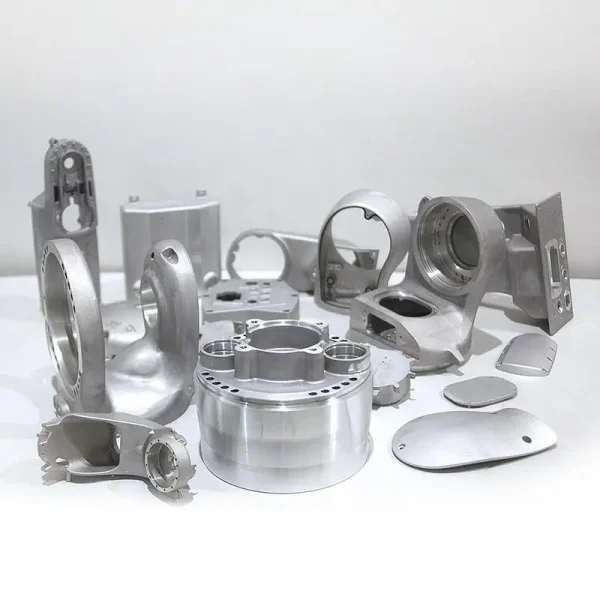
XINXIU provides integrated manufacturing support for customers developing custom metal components.
Our die casting capabilities cover aluminum, magnesium and zinc alloy components, with engineering support extending from product DFM and mold design to production and post-processing.
The manufacturing workflow can include:
DFM Analysis → Mold Design → Mold Manufacturing → Die Casting → CNC Machining → Surface Treatment → Quality Inspection
For projects with demanding internal-quality requirements, applicable inspection options can include X-ray inspection, material spectroscopy, leak testing and dimensional inspection.
Whether you are developing a new component or looking for a manufacturing partner for an existing die casting design, providing the 3D CAD model, material requirements and production quantity allows the engineering team to evaluate the project more efficiently.
Send your 3D drawing and project requirements to XINXIU for a die casting DFM review and quotation.
Frequently Asked Questions About Die Casting
What is die casting?
Die casting is a metal manufacturing process that injects molten metal into a reusable mold under pressure to produce complex and repeatable components.
What materials are commonly used for die casting?
Common die casting materials include aluminum, zinc and magnesium alloys. The appropriate alloy depends on the required mechanical performance, weight, corrosion resistance, dimensional requirements and application.
What are the most common die casting defects?
Common defects include incomplete filling, cold shuts, porosity, shrinkage, cracks, flash, deformation, flow marks, soldering and surface imperfections.
What causes porosity in die casting?
Porosity can be related to trapped air, gas in the molten metal, excessive turbulence, poor venting, injection conditions, release-agent application and other process factors.
How can die casting porosity be reduced?
Potential approaches include improving venting, optimizing gate and runner design, adjusting filling conditions, controlling molten-metal quality and considering vacuum die casting for suitable applications.
Why is DFM important for die casting?
DFM helps identify potential problems with wall thickness, draft angles, parting lines, gates, venting, cooling, ejection and machining before the mold is manufactured.
Can die-cast parts be CNC machined?
Yes. CNC machining can be combined with die casting when additional precision features, tighter dimensions, threads, holes or functional surfaces are required.
What information is needed for a die casting quotation?
A manufacturer will generally need a 3D CAD model, 2D drawing when available, material requirements, quantity, surface treatment and critical dimensional or functional requirements.
Does XINXIU provide die casting mold manufacturing?
Yes. XINXIU’s die casting workflow can include DFM analysis, mold design, mold manufacturing, die casting, CNC machining, surface treatment and quality inspection.