
Introduction
Choosing the right CNC machining process is one of the most important decisions during product development. While CNC milling and CNC turning are both precision subtractive manufacturing methods, they remove material in completely different ways and are optimized for different part geometries.
For engineers and purchasing managers, selecting the correct process can reduce manufacturing costs, shorten lead times, and improve dimensional accuracy. At XINXIU Precision, we specialize in custom CNC machining for prototypes and low-volume production, supporting aluminum, stainless steel, brass, titanium, ABS, POM, PEEK, and hundreds of engineering materials.
This guide explains the differences, advantages, limitations, applications, and selection criteria for CNC milling and CNC turning.
What Is CNC Milling?
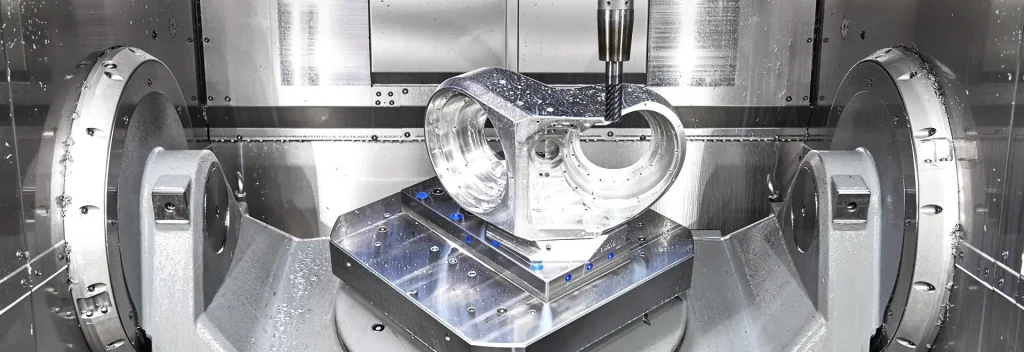
CNC milling is a machining process where the cutting tool rotates while the workpiece remains stationary. Computer-controlled movements along three, four, or five axes allow the cutter to remove material with exceptional precision.
Unlike conventional machining, CNC milling can create complex pockets, slots, curved surfaces, and free-form geometries with high repeatability.
Common milling applications
- Aerospace structural components
- Aluminum electronic housings
- Medical device enclosures
- Injection mold inserts
- Robotic mechanical parts
- Precision fixtures
Advantages of CNC milling
- Excellent for complex geometries
- High positional accuracy
- Supports 3-, 4-, and 5-axis machining
- Suitable for both plastics and metals
- Ideal for prototypes and production parts
What Is CNC Turning?
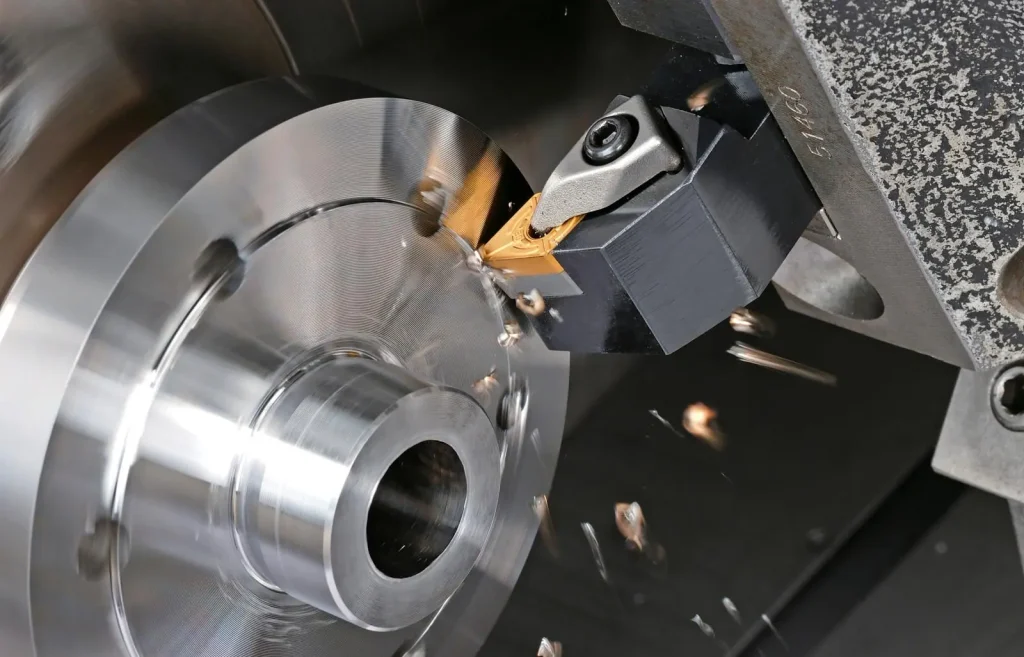
CNC turning works differently. The workpiece rotates, while the cutting tool remains relatively stationary and moves linearly to remove material.
This process is specifically designed for rotationally symmetrical components and delivers excellent concentricity and roundness.
Typical turning applications
- Precision shafts
- Bushings
- Valve stems
- Hydraulic fittings
- Threaded connectors
- Medical pins
Advantages of CNC turning
- Faster production for round parts
- Lower machining cost
- Excellent surface finish
- Superior concentricity
- High repeatability
CNC Milling vs Turning: Side-by-Side Comparison
| Feature | CNC Milling | CNC Turning |
|---|---|---|
| Workpiece movement | Fixed | Rotates |
| Cutting tool | Rotating cutter | Linear cutting tool |
| Best geometry | Complex & multi-face | Cylindrical |
| Typical tolerance | ±0.01–0.05 mm | ±0.01–0.03 mm |
| Surface complexity | Excellent | Limited |
| Production speed | Medium | Fast |
| Best for | Housings, molds | Shafts, bushings |
For cylindrical components, turning is generally the most economical solution. For brackets, housings, mold inserts, and structural parts, milling provides significantly greater flexibility.
Understanding 3-Axis, 4-Axis & 5-Axis Machining
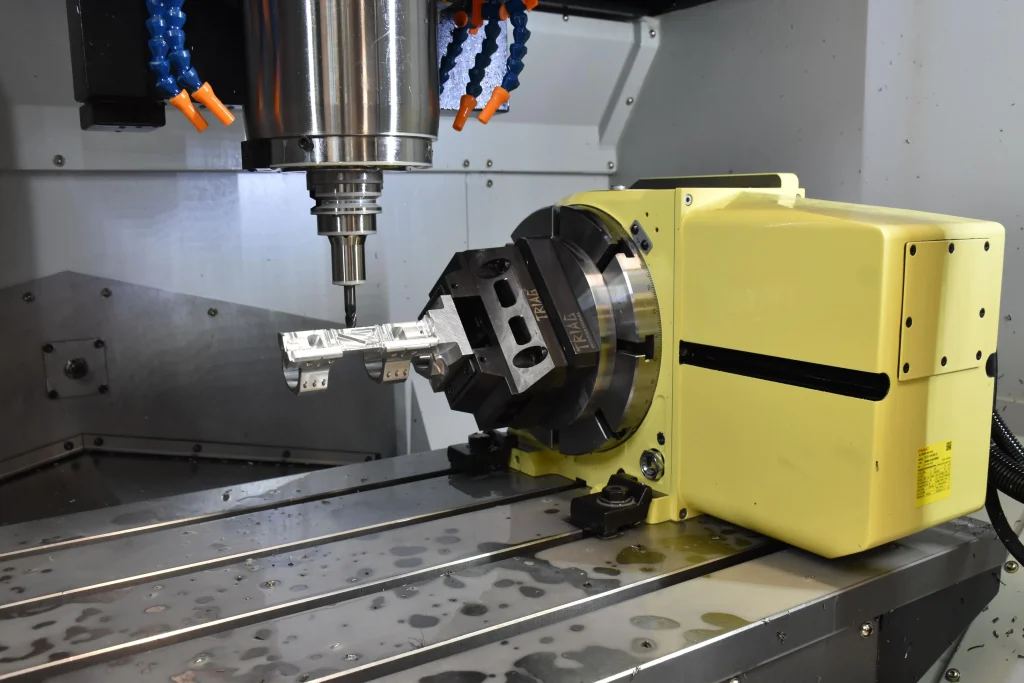
Modern CNC machining centers are classified by the number of controlled axes.
| Machine Type | Typical Capability |
| 3-Axis | Drilling, pockets, flat surfaces |
| 4-Axis | Rotary positioning and side machining |
| 5-Axis | Simultaneous complex free-form machining |
Why 5-axis machining matters
Five-axis machining dramatically reduces setup time because multiple surfaces can be machined in one operation. This improves dimensional consistency while reducing fixture errors.
Industries including aerospace, medical, robotics, and mold manufacturing increasingly rely on five-axis technology for high-precision components.
Materials Suitable for CNC Machining
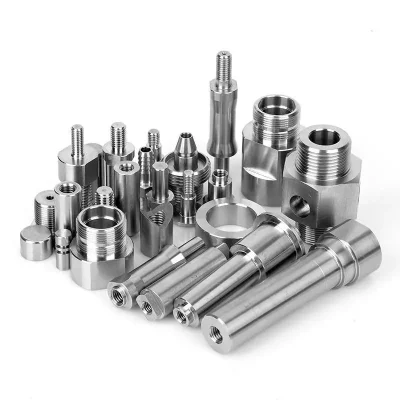
At XINXIU Precision, we machine a wide range of engineering materials.
Metals
- Aluminum 6061 / 7075
- Stainless Steel 304 / 316
- Brass
- Copper
- Titanium
- Carbon Steel
Engineering Plastics
- ABS
- POM (Delrin)
- Nylon
- PEEK
- Polycarbonate
- PTFE
Selecting the right material depends on strength, corrosion resistance, machinability, temperature resistance, and the final application environment.
Surface Finishing Options
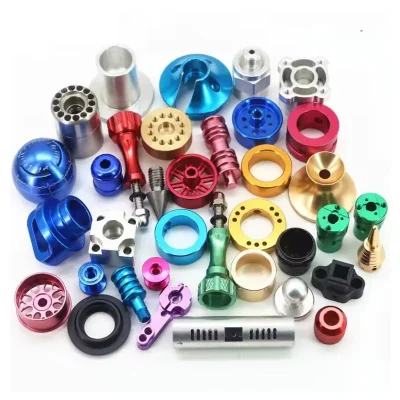
Machining is only one part of the manufacturing process. Surface finishing improves appearance, wear resistance, and corrosion protection.
Common finishes include:
- Bead blasting
- Sandblasting
- Clear anodizing
- Black anodizing
- Hard anodizing
- Powder coating
- Electropolishing
- Laser engraving
Different finishes are selected according to functional and cosmetic requirements.
Precision Tolerance & Quality Control
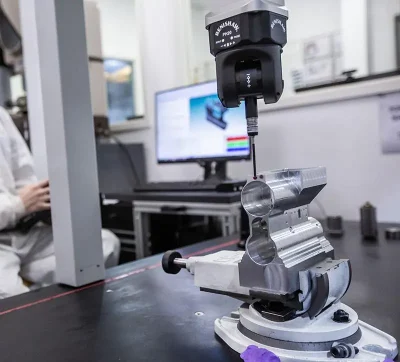
High-quality machining requires more than advanced equipment. A complete quality management system ensures consistent results throughout production.
XINXIU quality process
- Incoming material inspection
- In-process dimensional verification
- CMM precision measurement
- Surface quality inspection
- 100% final inspection before shipment
Our ISO 9001 quality system helps ensure every part meets customer drawings and GD&T requirements.
Cost Comparison: Which Process Is More Economical?
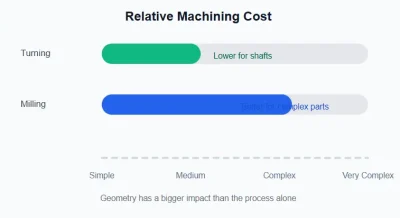
Many engineers assume turning is always cheaper, but the geometry of the component has a greater impact on cost than the machining process itself.
Turning is more economical when:
- The part is cylindrical
- High-volume shaft production is required
- Threading and concentricity are critical
Milling becomes more efficient when:
- Multiple setups are eliminated with 5-axis machining
- Complex pockets and contours are required
- Several features are machined in one operation
A well-optimized design can reduce machining costs by 20–40% simply by improving manufacturability.
Industry Applications
Automotive Components
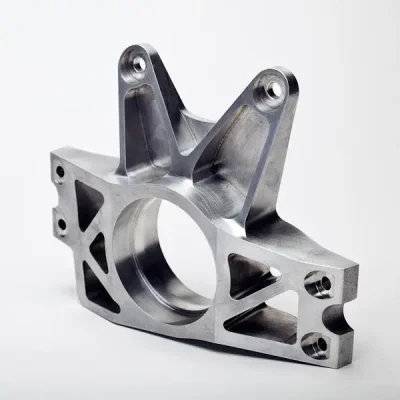
Automotive manufacturing demands lightweight materials, repeatable precision, and reliable production. CNC milling is commonly used for aluminum housings and structural brackets, while turning produces shafts and steering components.
Automotive Components
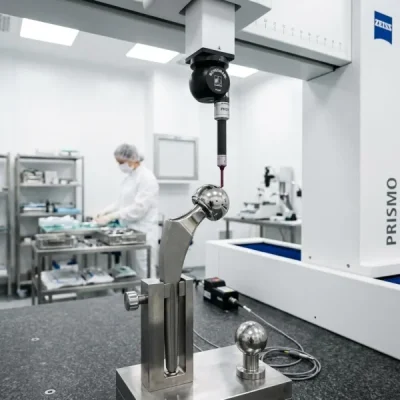
Medical components require exceptional dimensional accuracy and high-quality surface finishes. Stainless steel and titanium are widely used because of their corrosion resistance and biocompatibility.
Robotics & Automation
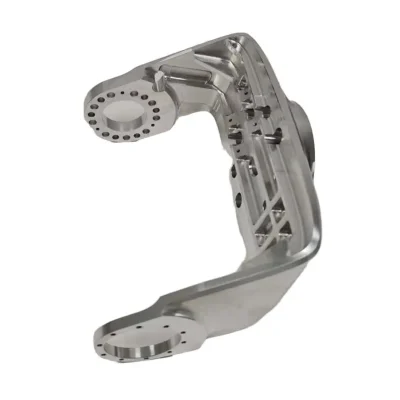
Robotic systems combine complex aluminum housings with precision rotating shafts. As a result, many assemblies require both milling and turning during manufacturing.
How to Choose the Right Process
Ask these five questions before requesting a quotation:
- Is the part primarily cylindrical?
- Does it require multiple machining orientations?
- Are tight positional tolerances required?
- What is the production quantity?
- Is cosmetic surface finish important?
Choose CNC Turning if:
- The component is rotationally symmetrical
- Concentricity is critical
- High-speed production is required
Choose CNC Milling if:
- The part contains pockets or slots
- Multiple faces require machining
- Free-form surfaces are involved
- Five-axis machining can reduce setups
Our engineering team provides free DFM evaluation and recommends the most efficient manufacturing strategy before production begins.
Why Choose XINXIU Precision?
6 XINXIU Precision provides complete manufacturing solutions from prototype to low-volume production.
Our capabilities
- ✅ 60+ high-precision CNC machines
- ✅ 3-, 4-, and 5-axis machining centers
- ✅ CNC milling & turning
- ✅ EDM and wire cutting
- ✅ ISO 9001 certified quality system
- ✅ 100% inspection before shipment
- ✅ No minimum order quantity
- ✅ Engineering response within 24 hours
- ✅ Production available in as little as 5 days
Whether your project requires a complex aluminum housing or a precision stainless steel shaft, our experienced engineers can deliver reliable, cost-effective machining solutions.
Frequently Asked Questions
Is CNC milling more accurate than CNC turning?
Both processes achieve excellent precision. Turning offers better concentricity for shafts, while milling provides superior positional accuracy for complex geometries.
Can one part require both milling and turning?
Yes. Many precision components are first turned to create the cylindrical profile and then transferred to a milling center for holes, slots, flats, and keyways.
Which process is better for prototype manufacturing?
It depends on the geometry. Housings and structural parts usually favor milling, while shafts and bushings are generally faster and more economical to produce by turning.
What CAD formats does XINXIU accept?
We support STEP, STP, IGES, X_T, Parasolid, and most common 3D CAD file formats for quotation and manufacturing.