
Gravity Die Casting Services
High-Value-for-Money Gravity Die-Casting Parts Manufacturer
With 15 years of experience, we provide one-stop custom gravity die-casting services for aluminum and zinc alloys.
✓ Complete Solutions: From mold design and gravity die casting to precision machining and surface treatment, we provide OEM/ODM services for automotive, lighting, appliance, and industrial applications.
✓ Strong Production Capacity: Equipped with multiple gravity die-casting machines and supporting facilities for melting, heat treatment, shot blasting, and polishing.
✓ Cost-Effective: Lower equipment and process costs make gravity die casting ideal for small- to medium-volume production.
✓ Reliable Quality: CMMs, spectrometers, and X-ray inspection ensure quality control from raw materials to finished parts.
✓ Professional Support: Our engineers provide dedicated support from mold design and production to final delivery.
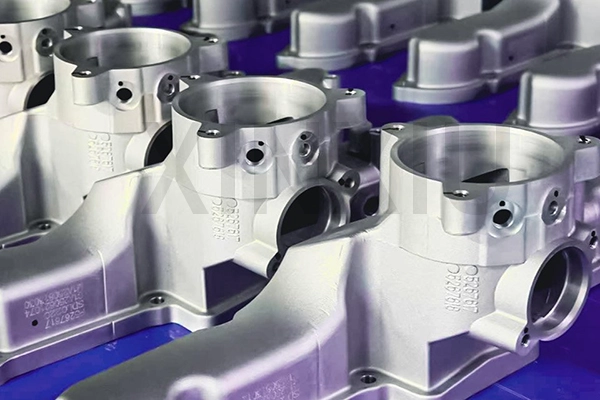
What is gravity die casting?
Gravity die casting, also known as gravity casting, is a casting process in which molten metal flows naturally into the mold cavity under its own weight. Without the application of external force, the molten metal fills the mold by gravity and, after cooling and solidifying, forms a casting with the desired shape.
This process has a long history, is technically mature, features simple equipment design, and involves low investment costs, making it particularly suitable for small- to medium-volume production and the manufacture of large components. With technological advancements, sand cores have been introduced into gravity casting, enabling the production of complex-shaped parts using this method.
All uploaded content will be handled securely and confidentially
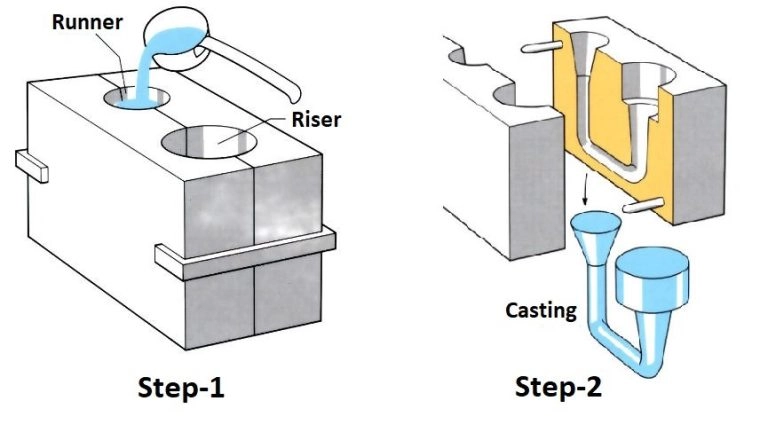
The Process Flow of Gravity Die Casting
Gravity die casting uses the weight of molten metal to fill the mold, without external pressure.
-
Mold Preparation: Preheat the mold and apply a release agent to facilitate demolding and extend the mold’s service life
-
Metal Melting: Heat the aluminum or zinc alloy until it reaches a liquid state, and control the optimal pouring temperature
-
Pouring: Use a steel ladle to scoop molten metal and slowly pour it into the mold cavity through the sprue
-
Solidification: After the molten metal fills the cavity, allow it to cool and solidify completely
-
Mold Opening andPart Removal: Open the mold and remove the formed casting
-
Post-processing: Cut off the sprue, grind away flash, and perform CNC machining and surface treatment
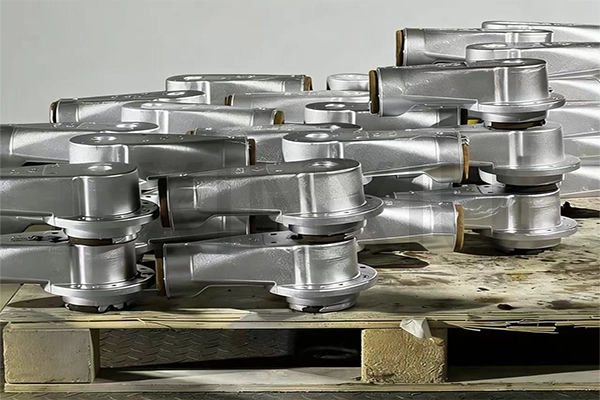
Advantages and Disadvantages of Gravity Die Casting
✅ Advantages
• Low Cost: Simple equipment with low investment and operating costs.
• High Density: Denser structure and better mechanical properties than sand casting.
• Low Porosity: Fewer internal pores and fine-grained structure.
• Cost-Effective: Ideal for small- to medium-volume production.
• Heat Treatment: Suitable for T5/T6 treatment to improve strength.
• Good Surface Finish: Supports high-quality surface finishing.
❌ Disadvantages
• Lower Efficiency: Longer cycle times than high-pressure die casting.
• Limited Precision: Generally lower dimensional precision than other automated casting methods.
• Complex Parts: Complex geometries may require sand cores and are more difficult to produce.
| Comparison Item | Gravity Die Casting | High Pressure Die Casting (HPDC) |
|---|---|---|
| Process Principle | Gravity fills the mold naturally | High pressure (10-200MPa) high speed injection |
| Equipment Cost | Low | High |
| Tooling Cost | Lower | Higher |
| Production Efficiency | Low (several minutes/piece) | High (tens of seconds/piece) |
| Dimensional Accuracy | ±0.05mm | ±0.01-0.02mm |
| Surface Finish | Ra 1.6-3.2μm | Ra 0.8-1.6μm |
| Internal Quality | Low porosity, high density | Prone to porosity and shrinkage |
| Heat Treatment | Excellent suitability (T5/T6) | Not suitable (bubbling risk) |
| Wall Thickness Capability | Suitable for thick walls | Suitable for thin walls (0.5-5mm) |
| Part Complexity | Simple to moderate | Excellent for complex shapes |
| Maximum Part Size | Larger parts possible | Limited by clamping force |
| Material Range | Aluminum, Zinc, Copper alloys | Aluminum, Zinc, Magnesium alloys |
| Minimum Order Quantity | From 1 piece | Mass production is more economical |
| Best Application | Small to medium batches, large parts | Mass production, precision parts |
Industry Applications | Deeply Rooted in Multiple Global Sectors
For the past 15 years, our gravity die-cast components have served the following industries, earning our customers’ trust through consistent quality and precision craftsmanship.
Automotive Industry
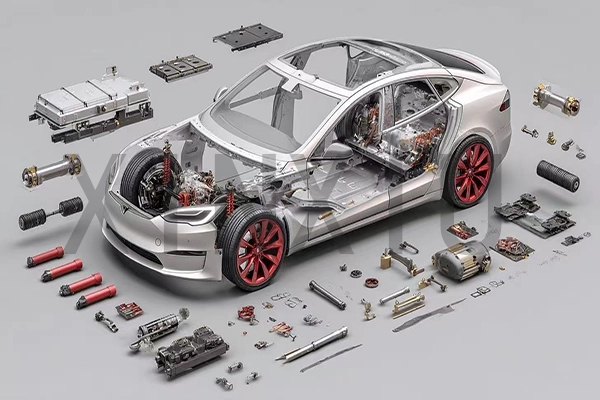
Communication equipment

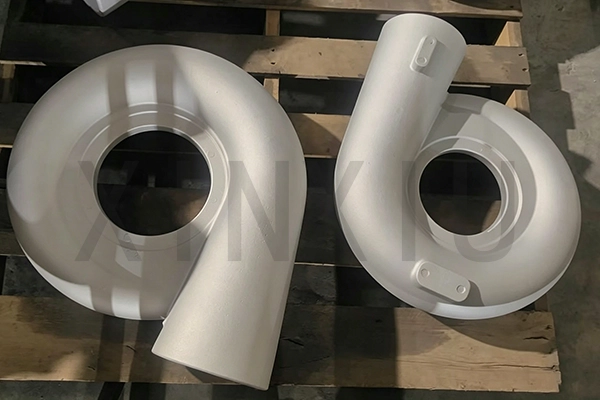
Industrial machinery
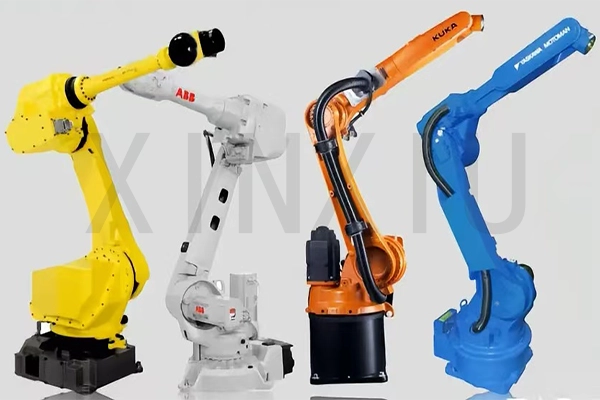
robot
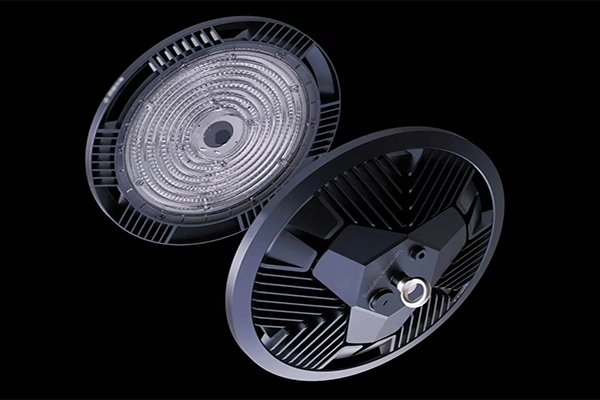
Lighting Industry
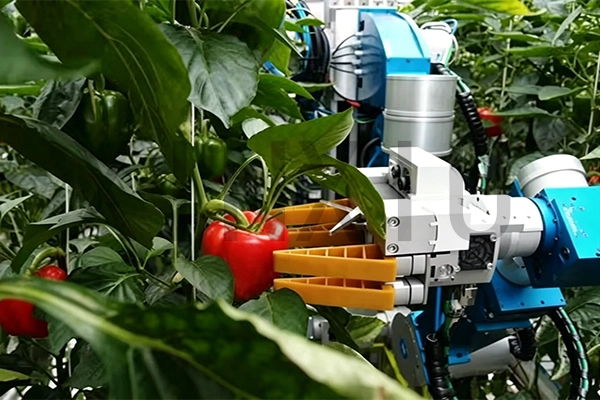
Agriculture
Frequently Asked Questions (FAQ) onGravity die casting
- How should I choose between gravity die casting and high-pressure die casting?
- Recommendation: If you are producing small to medium batches (a few hundred to a few thousand pieces), have larger parts, or require heat treatment, choose gravity die casting. If you are producing large batches, complex thin-walled parts, or require high precision, choose high-pressure die casting.
- Is there a minimum order quantity for gravity die casting?
- We have no minimum order quantity policy; orders start from just one piece. Whether you’re in the R&D phase for prototype validation, small-batch trial production, or mass production, we can handle it. This is particularly beneficial for new product development and urgent restocking.
- How long will it take to receive a sample?
- Generally, gravity die-casting samples can be completed within 7 to 15 days. The exact timeframe depends on the product’s complexity, mold design, and whether post-processing steps such as heat treatment are required. We have a dedicated rapid prototyping team to help customers shorten their development cycles.
- What level of precision can gravity die casting achieve?
- Standard gravity die casting offers dimensional accuracy of ±0.05 mm and a surface roughness of Ra 1.6–3.2 μm. If parts require higher precision, we can achieve this through subsequent CNC machining, which offers accuracy as high as ±0.01 mm.
- Can gravity die castings undergo heat treatment?
- Yes. Aluminum alloy gravity die-cast parts are highly suitable for T5 and T6 heat treatment. After T6 heat treatment, the tensile strength of the casting can increase by 30% to 50%, and hardness by 20% to 30%, meeting the high-strength application requirements for automotive components, mechanical structural parts, and more.
- How do I get a quote?
- Please provide 3D drawings (in STP or IGS format), planned production quantity, material grades (e.g., A356, ADC12, Zamak 3, etc.), and surface treatment requirements. Upon receiving your information, we will provide a free quote and DFM analysis report within 24 hours.