
3D printing services
Industrial-grade 3D printing
Industrial-Grade 3D Printing
XINXIU provides high-quality 3D printing for prototypes and small-batch production, with lead times as fast as 3 days.
Multiple Processes
FDM, SLA, SLS, and SLM technologies for plastic and metal parts, including complex geometries and detailed designs.
What Is 3D Printing?
3D printing is an additive manufacturing process that builds parts layer by layer directly from digital designs.
Technical Advantages
✓ Design Freedom: Create complex geometries and intricate details.
✓ Fast Lead Times: Get parts in as little as 3–5 days.
✓ Complex Shapes: Produce designs that traditional methods cannot easily achieve.
✓ Lower Costs: No molds or tooling required for most projects.
XINXIU delivers efficient 3D printing solutions from prototyping to small-batch production.
All uploads are secure and confidential
SLA (Stereolithography)
SLA is one of the earliest 3D printing technologies to be invented. It uses an ultraviolet laser to cure liquid photopolymer resin layer by layer, producing high-precision plastic components. The surface finish is smooth and fine, with a precision of up to ±0.05–0.1 mm. It offers a wide range of material options (including ABS-like, transparent and heat-resistant materials) and is suitable for applications such as design validation, prototype modelling, jewellery and dentistry.
Working Principle: An ultraviolet laser scans the surface of the liquid resin; the irradiated area solidifies instantly, whilst the build platform descends layer by layer, stacking layers until the part is formed. Once printing is complete, the part requires cleaning and secondary curing.
SLS (Selective Laser Sintering)
SLS utilises a high-power laser to selectively sinter layers of nylon powder, eliminating the need for additional support structures and allowing for the design of complex internal geometries. It offers excellent mechanical properties and good toughness, using nylon and its composites, making it suitable for functional testing, snap-fit assemblies and small-batch production.
Working Principle: The laser sinter a layer of powder, with the unsintered powder naturally supporting the overhanging sections. After forming, the powder block is removed; the finished product is obtained by clearing away loose powder and can be dyed or sandblasted as required.
FDM (Fused Deposition Modeling)
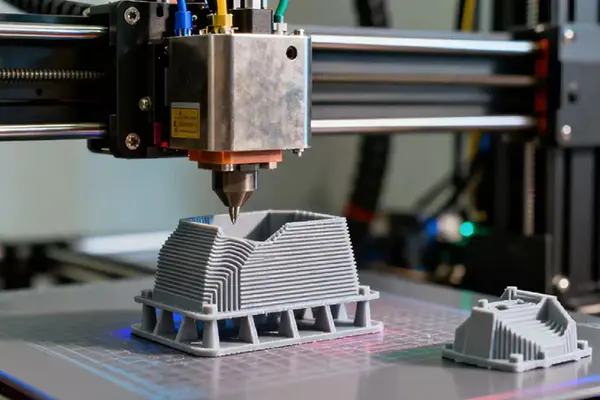
FDM is a 3D printing technology that melts thermoplastic filament and extrudes it layer by layer. The filament is melted by a heated nozzle and deposited onto the build plate along a cross-sectional path; it cools and solidifies to form a layer, which is then stacked layer by layer until the part is complete.
How it works: The filament is melted and extruded through a heated nozzle, deposited onto the build plate along a cross-sectional path, and then cools and solidifies. After one layer is completed, the build plate descends or the nozzle rises to continue depositing the next layer, with layers stacked one on top of another until the part is fully formed.
SLM (Selective Laser Melting)
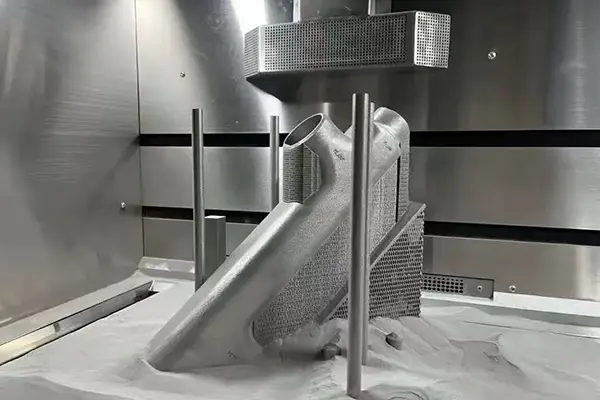
SLM is a metal 3D printing technology that uses a high-power laser to fully melt metal powder, stacking layer by layer to form dense metal components. With strength approaching that of forged parts and a density of nearly 100%, the technology supports materials including stainless steel, titanium alloys and aluminium alloys, making it suitable for aerospace, medical implants and mould inserts.
Working Principle: Under an inert gas shield, the laser fully melts the metal powder, fusing it layer by layer. After forming, the part requires heat treatment to relieve stress, followed by post-processing such as wire cutting and machining to produce the final component.
How to Choose a 3D Printing Process
Selecting the appropriate 3D printing process requires a comprehensive assessment of your part’s intended use, precision requirements, material properties and budget. Below is a brief comparison of the mainstream processes:
✓FDM (Fused Deposition Modelling): Suitable for proof-of-concept and large, simple parts; lowest cost; easy to operate
✓ SLA (Stereolithography): Suitable for high-precision cosmetic parts and jewellery models; smooth, fine surface finish
✓ SLS (Selective Laser Sintering): Suitable for complex functional parts and snap-fit assemblies; requires no support structures and offers excellent mechanical properties
✓ SLM (Selective Laser Melting): Suitable for metal functional parts; strength comparable to forged components
Our 3D printing technology team is always here to assist you. If you have questions about selecting the right 3D printing process, our additive manufacturing experts can provide professional consultation and recommend the optimal process solution tailored to your product requirements.
3D Printing Technology Comparison
Comprehensive guide to metal and plastic additive manufacturing processes
| Category | Technology | Equipment | Material | Specification | Surface Finishing | Tolerance | Advantages | Limitations | Applications | Max Build Size |
|---|---|---|---|---|---|---|---|---|---|---|
| Metal | SLM | Metal Printer | Aluminum | ALS10Mg / 6061 |
Sandblasting, Oxidation coloring, Polishing, Plating, Passivation, Spraying |
±0.10mm High precision requires post-machining |
|
|
Automotive, Medical, Consumer Electronics, Toys, Mechanical Equipment, Aerospace |
270×270×350mm |
| Metal | SLM | Metal Printer | Stainless Steel | 316L |
Sandblasting, Polishing, Plating, Passivation, Spraying |
±0.10mm High precision requires post-machining |
|
|
Mold industry (Plastic/Die-casting/Silicone molds), Medical devices |
Send drawing for evaluation |
| Metal | SLM | Metal Printer | Titanium Alloy | TC4 |
Sandblasting, Polishing, Spraying |
±0.10mm Rough surface finish |
|
|
Medical implants, Aerospace components, High-end mold inserts |
Spliceable, size unlimited |
| Plastic | SLA | SLA Machine | Photopolymer Resin | ABS-like (Multi-color) |
Sanding, Sandblasting, Spraying, Screen printing, Vacuum coating, UV, Laser engraving |
±0.10mm |
|
|
Automotive, Medical, Consumer Electronics, Toys, Mechanical Equipment, Aerospace |
1200×600×400mm |
| Plastic | SLA | SLA Machine | Photopolymer Resin | Transparent/Clear |
Sanding, Polishing, Sandblasting, Spraying, Vacuum coating |
±0.10mm |
|
|
Clear housings, Light guides, Fluid observation parts |
600×600×400mm |
| Plastic | MJF | MJF Printer | Nylon | PA12 (Black) |
None (Default sandblasted matte) |
±0.10mm |
|
|
Home appliances, Power tools, Automotive parts, Functional components |
200×200×100mm |
| Plastic | DLP | DLP Printer | Castable Resin/Wax | Red / Castable |
None (Support removal only) |
±0.05-0.10mm |
|
|
Jewelry, Precision figurines, Dental models |
200×100×200mm |
| Plastic | FDM | FDM Printer | Thermoplastic Filament | PLA / ABS (Multi-color) |
Sanding, Sandblasting, Spraying, Screen printing, Laser engraving |
±0.20mm Visible layer lines |
|
|
Art crafts, Lighting, Home decor, Figurines, Concept models |
1000×1000×500mm |
📌 Tolerance Notes: "±0.10mm" refers to typical as-printed accuracy. For higher precision (e.g. ±0.05mm), please allow machining allowance for post-CNC finishing.
🔄 Surface Finishing: Default finish includes support removal + sandblasting. Special post-processing such as plating, polishing, and anodizing requires feasibility confirmation.
📏 Large Parts: Processes marked "spliceable" can be printed in sections and assembled for oversized requirements. For parts exceeding standard build volume, please provide 3D drawings for evaluation.
⚙️ Medical Applications: Titanium alloy (TC4) and select nylon materials (PA12) offer biocompatibility for medical implants and surgical guides. Application-specific validation is required.
Request a quote online today. Work with our team of 3D printing experts to get high-quality parts quickly.
All uploaded content will be handled securely and confidentially
Large-format 3D printing services
XINXIU is equipped with state-of-the-art large-format 3D printing equipment capable of meeting the rapid manufacturing needs for large, complex parts. This eliminates the need for mold investment and significantly shortens product development cycles. Whether you require large structural components, functional prototypes, or end-use parts, we can provide efficient and precise additive manufacturing solutions.
The maximum print dimensions for metal parts are 31.5 inches × 15.7 inches × 19.7 inches (400 mm × 800 mm × 500 mm), with support for high-performance materials such as aluminium alloy and Inconel.
The maximum print dimensions for plastic parts are 29 inches × 25 inches × 21 inches (736 mm × 635 mm × 533 mm), with support for a variety of engineering plastics including ABS, PC and nylon PA12.
Surface finishing options for 3D printing
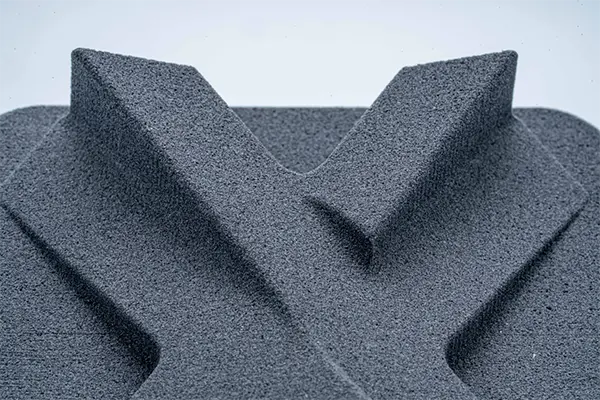
3D printing only
Once the part has been printed, only the support structures are removed; in its raw state, without any post-processing, the surface exhibits a uniform, sandblasted texture.
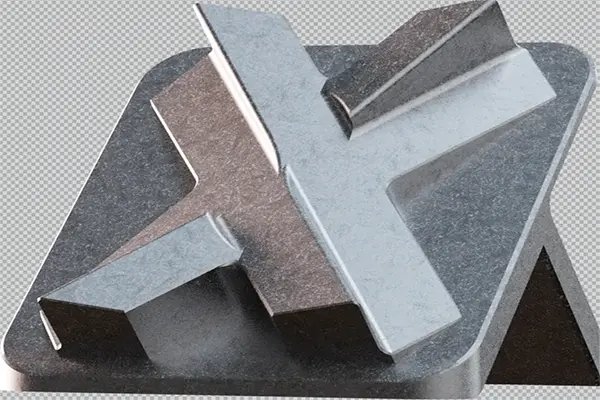
Drum deburring
This is a batch surface finishing process that uses a tumbling machine to remove sharp edges and burrs from the surface of parts, whilst eliminating external machining marks to create a more uniform appearance. After treatment, the surface feels smooth and has a satin-like matt finish.
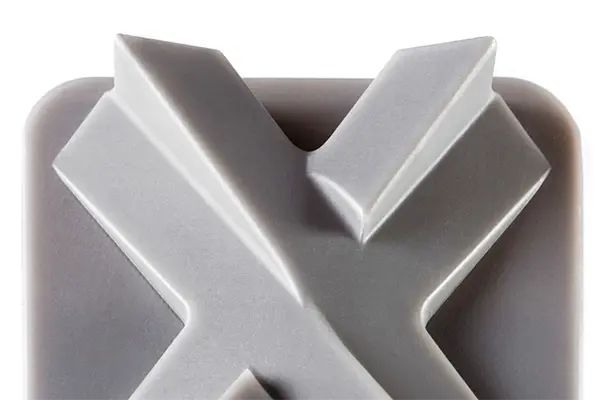
sandblasting
This process involves using compressed air to propel sand at high speed onto the surface of the part, creating a uniform matt finish that masks minor imperfections; it is a common post-processing method for SLS, SLM and MJF printed parts.

Customised for the client
We offer flexible, bespoke surface treatment services to meet your specific requirements regarding product appearance, feel and performance. Whether you require a particular colour, texture or functional coating, our team of engineers can develop a bespoke surface treatment solution tailored to your design specifications.
Processing equipment
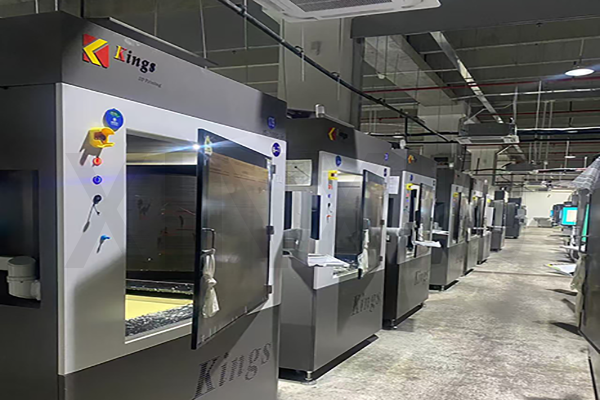
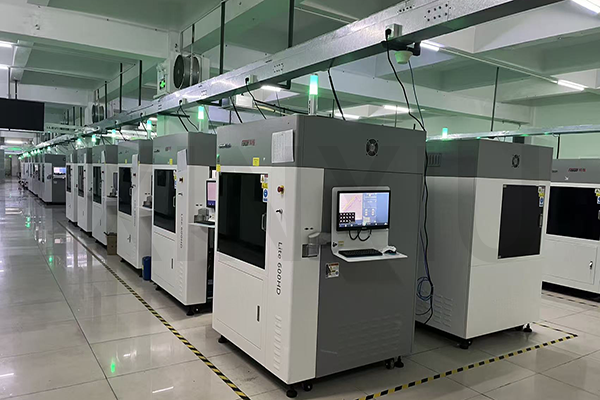
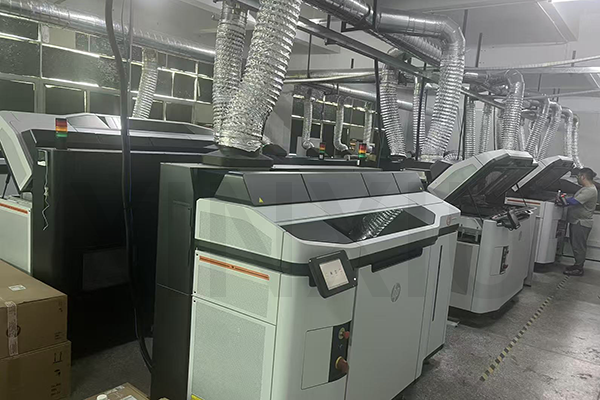
3D Printing Customer Case Studies
Typical applications of 3D printing
Prototyping
No moulds required; rapid design validation; shorter development cycles
Small-batch production
Zero moulding costs; no minimum order quantities; cost-effective
Customised parts
Personalised designs; direct addition of textures, logos and serial numbers
Complex Geometries
Easily realise internal channels and lattice structures that cannot be manufactured using traditional methods
Spare Parts on Demand
Digitally stored, printed on demand, reducing inventory costs
Personalised Medical Devices
Customised implants and surgical guides based on patient data