Internal Link Plan
- Die Casting Services
- Rapid Tooling
- Custom Export Molds
- Single-Cavity vs Multi-Cavity Die Casting Molds
Article
Die Casting Tooling Lead Time: A Practical Mold Manufacturing Timeline
Introduction
Die casting tooling lead time is not simply the number of machining days required to cut steel. A realistic schedule includes engineering review, DFM, mold design, material procurement, CNC and EDM, heat treatment where required, assembly, fitting, trial casting, sample inspection and customer approval.
For buyers, the most important question is therefore: what does the quoted lead time actually include, and what events start and stop the clock?
1. Define the Start and Finish Milestones
Different suppliers use different definitions. One may count from purchase order. Another may count from receipt of final CAD data. Some exclude customer approval or trial modifications.
For purchasing, define a clear milestone such as:
Final approved product data → first acceptable sample.
This avoids comparing a “20-day mold” with a “30-day mold” when the two quotations cover different stages.
2. Stage One: Engineering Review and DFM
Before steel is cut, the part should be reviewed for manufacturability.
Typical review points include:
- draft
- parting line
- undercuts
- slides and cores
- gate and runner concept
- overflow and venting
- cooling
- ejection
- machining allowance
- critical tolerances
- downstream CNC requirements.
Early changes are generally easier than modifications after tooling components have been machined.
3. Stage Two: Mold Design
The mold designer converts the product geometry into a tool structure. The design may include cavity and core inserts, runner system, gates, cooling circuits, ejectors, slides and other mechanisms.
Complexity increases when the part has deep cores, multiple undercuts, special cooling requirements, high dimensional demands or difficult machining access.
Customer approval of the mold design should be treated as a formal schedule milestone.
4. Stage Three: Steel and Purchased Components
Steel and standard mold components need to be available before manufacturing can proceed efficiently.
Special steel grades, unusual dimensions, imported components or late specification changes can affect the schedule. Procurement planning is therefore part of tooling lead-time management.
5. Stage Four: CNC Machining and EDM
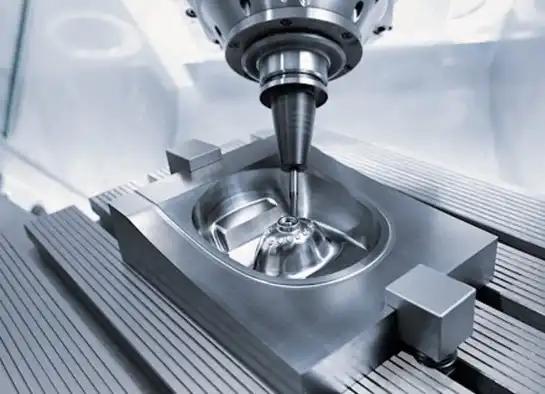
CNC machining creates the major mold geometry. EDM is useful for features that are difficult to produce with conventional cutting tools.
Lead time depends on:
- steel size
- geometry
- number of setups
- tolerance
- surface requirements
- machine availability
- EDM electrode count
- parallel work opportunities.
A supplier that can run compatible tasks in parallel may shorten the calendar without reducing machining quality.
6. Stage Five: Heat Treatment and Surface Preparation
Some components require heat treatment or other preparation before final fitting. Polishing and surface preparation can also influence the schedule.
The exact sequence depends on the tool design and material specification.
7. Stage Six: Assembly and Fitting
The mold must be assembled and checked. Engineers verify alignment, slides, ejectors, cooling connections, moving mechanisms and parting surfaces.
Fitting is not an optional cosmetic step. Poor alignment can create flash, abnormal wear, difficult ejection and unstable production.
8. Stage Seven: Trial Casting
The first trial tests the real tool under production conditions. Engineers may review filling, ejection, dimensions, appearance and other requirements.
A trial can reveal the need for changes to gates, overflows, vents, cooling or process parameters. A realistic schedule therefore includes time for trial evaluation and adjustment.
9. Stage Eight: Inspection and Sample Approval
Customers may require dimensional inspection, leak testing, visual approval, material verification or other validation.
The faster the customer consolidates feedback, the less likely the approval stage is to become a schedule bottleneck.
10. What Usually Delays Tooling?
Common causes include:
- product design changes after approval
- incomplete CAD or drawing information
- late material decisions
- complex slides and deep cores
- difficult cooling
- extensive EDM
- high cosmetic requirements
- additional sample modifications
- slow customer feedback
- unclear sample-approval criteria.
Many “supplier delays” are actually a combination of engineering and approval delays.
11. Rapid Tooling vs Production Tooling
Rapid tooling can shorten the path to functional samples or low-volume production. Production tooling generally requires more durable components and validation for longer-term use.
XINXIU states that suitable rapid die casting tooling projects can be completed in around 12 working days, while production tooling can take longer depending on geometry and validation. These figures should be treated as project-dependent rather than a universal guarantee.
12. How Buyers Can Shorten the Schedule
The most effective actions are administrative and engineering:
1. Freeze the product revision.
2. Send complete 3D and 2D data.
3. Specify alloy and quantity.
4. Mark critical dimensions.
5. Approve DFM quickly.
6. Consolidate design feedback.
7. Confirm inspection requirements before trial.
8. Define what constitutes sample acceptance.
9. Respond quickly after the first trial.
13. How to Read a Supplier Schedule
Ask the supplier to identify:
- DFM completion
- mold-design approval
- steel arrival
- machining start
- assembly
- first trial
- inspection
- modification
- sample approval
- production release.
A milestone schedule is more useful than a single number such as “20 days.”
14. Why Complex Housings Take Longer
A large housing may require substantial machine capacity, deep cores, slides, complex cooling, tight interfaces and leak testing. The schedule therefore depends on engineering and validation complexity rather than part weight alone.
A simple bracket may move through tooling quickly even if both projects are quoted as “aluminum die casting.”
15. A Buyer’s Tooling Lead-Time Checklist
Before issuing a purchase order, confirm:
- final CAD revision
- drawing revision
- alloy
- expected volume
- cavity strategy
- mold scope
- trial quantity
- inspection scope
- sample approval method
- change-management process
- delivery milestone.
Conclusion
Die casting tooling lead time is a chain of engineering, manufacturing and approval milestones. The fastest reliable projects are not necessarily those with the most aggressive quoted number; they are the projects with frozen data, clear requirements, efficient tooling engineering and rapid feedback. Buyers who define the start and finish points of the schedule can compare suppliers more accurately and reduce avoidable delays.
FAQ: How long does die casting tooling take?
The answer depends on geometry, tooling complexity, material, machining, trial requirements and approval. A simple tool and a complex housing should not be assigned the same generic lead time.
FAQ: What should a tooling lead-time quotation include?
Ask for DFM, design approval, steel procurement, machining, assembly, first trial, sample inspection, modifications and final approval milestones.
FAQ: Can customer feedback delay mold delivery?
Yes. Changes after design approval can affect already-machined components, especially inserts, slides, cooling and electrodes.
FAQ: Does rapid tooling mean the same thing as production tooling?
No. Rapid tooling is intended to shorten development or low-volume programs. Production tooling is normally designed around longer-term production requirements.
FAQ: How can I shorten tooling lead time?
Freeze CAD data, provide complete drawings, define quality requirements early, approve DFM promptly and consolidate feedback after trial.