Internal Link Plan
- CNC Machining Services
- Die Casting Services
- A380 Transmission Housing Case
- Aluminum Steering Gear Housing Case
- Reduce Die Casting Costs Through Part Design
Article
Die Casting vs CNC Machining: When Should a Cast Part Be CNC Finished?
Introduction
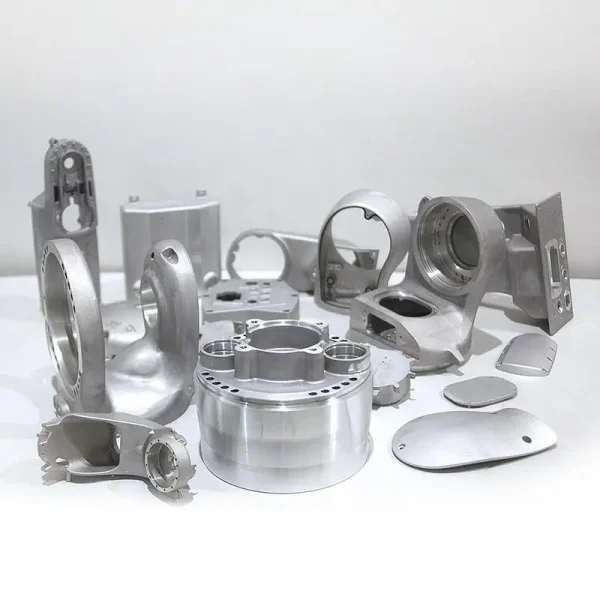
Die casting and CNC machining are not competing processes in every project. They often work together. Die casting creates complex near-net-shape geometry efficiently, while CNC machining finishes selected surfaces and features that require tighter dimensional control, specific datums or controlled surface finish.
The key manufacturing question is not “Can CNC machine this part?” It is “Which features should be cast, which should be machined, and when does the combined route become more economical and reliable?”
1. What Die Casting Does Well
Die casting is useful for complex production components with features such as:
- ribs
- bosses
- housings
- mounting structures
- pockets
- external contours
- integrated functional geometry.
For production programs, creating most of the shape in the mold can reduce the amount of material removed later.
2. What CNC Machining Adds
CNC machining is valuable for features where the final specification requires more controlled geometry.
Common examples include:
- bearing bores
- sealing faces
- precision mounting faces
- critical hole patterns
- threads
- datum surfaces
- flatness-critical interfaces
- precision diameters.
Machining should be targeted at functional requirements rather than applied to every surface.
3. When Machining Is Usually Unnecessary
Large external surfaces may not need CNC if their as-cast condition already meets the function and appearance requirement. Non-critical ribs and hidden surfaces can often remain as cast.
Machining every surface increases cycle time, tooling consumption, fixture requirements, handling and inspection.
4. Plan Machining Before Mold Design
The best results occur when casting and machining are planned together.
During DFM, identify:
- machining surfaces
- datums
- hole locations
- final tolerances
- machining allowance
- tool access
- fixture locating points.
If these requirements are added after the mold is complete, the casting may not provide enough material or a stable locating structure.
5. Machining Allowance
A CNC cutter needs enough material to remove the casting variation and reach the final surface. Too little allowance can leave casting skin or prevent a dimension from being achieved. Too much allowance increases cutting time and material removal.
The correct allowance depends on the casting process, feature size, expected variation and final tolerance. It should be established during engineering review.
6. Datum Strategy
A good datum strategy improves repeatability. Functional datums should be connected logically to the casting and the final assembly.
When several features can be machined from one stable orientation, the number of setups can often be reduced. Fewer setups can reduce fixture cost, handling and accumulated positional variation.
7. Tool Access and Feature Orientation
A hole that can be drilled directly may be cheaper than one requiring an angled setup. A sealing face that is accessible from one direction can reduce cycle time compared with a feature hidden behind another wall.
Part design should therefore consider the cutting tool’s path, not only the finished geometry.
8. CNC Milling, Turning and Multi-Axis Machining
Most die cast housings and brackets use CNC milling for faces, holes and pockets. Turning is suitable for rotational features. Multi-axis machining can help when several faces or complex surfaces need access with fewer setups.
The most advanced machine is not automatically the best machine. The correct choice is the simplest reliable process that meets the specification.
9. Tolerance Planning
Separate as-cast tolerances from machined tolerances. Tight tolerance should be reserved for features that affect assembly, sealing, motion or other functional requirements.
Applying precision tolerances everywhere can increase machining and inspection cost without adding product value.
10. Surface Finish
CNC machining can provide controlled finish on functional surfaces, but appearance requirements may also be addressed by blasting, polishing, painting, powder coating, anodizing or plating.
The final finish should be considered as a complete process route. A surface that will later be coated may not need the same machining finish as a sealing face.
11. Inspection After Machining
Inspection should match the risk of the feature. Depending on the component, verification may include gauges, dimensional measurement, CMM inspection or leak testing.
Critical features should be identified before production so the inspection plan is clear.
12. Die Casting + CNC vs CNC From Solid
CNC machining from billet can be attractive for prototypes, very low volumes or simple components. Die casting followed by selective CNC can become more economical as production volume and geometric complexity increase.
The comparison should include:
- material utilization
- machine time
- fixture cost
- tooling
- cycle time
- scrap
- secondary operations
- inspection
- expected production volume.
A casting-plus-machining route can also reduce the amount of material removed by CNC.
13. Example: Aluminum Transmission Housing
A complex aluminum transmission housing may contain large external geometry, internal passages and selected precision interfaces. Casting can create the body while CNC finishes functional surfaces. Leak testing can then verify the finished assembly.
This is a better use of CNC than machining the complete housing from a large billet.
14. Example: Steering Gear Housing
A steering gear housing can require controlled mounting interfaces, bores and sealing areas. The casting creates the structural form, while CNC establishes the critical dimensions.
Planning the two stages together helps avoid a common mistake: designing the mold without considering how the finished part will be located and machined.
15. How to Reduce Secondary Machining Cost
Use:
- fewer CNC setups
- stable datums
- accessible features
- realistic tolerances
- controlled machining allowance
- fixtures based on repeatable casting features
- machining only where function requires it.
Avoid:
- deep narrow pockets
- unnecessary precision on cosmetic surfaces
- isolated features that require special setups
- machining surfaces that already meet requirements as cast.
16. When the Combined Route Is Especially Useful
The die casting + CNC route is often attractive for:
- aluminum housings
- motor housings
- brackets
- heat-management components
- transmission components
- communication enclosures
- structural parts with precision interfaces.
17. XINXIU’s Integrated Approach
XINXIU provides die casting, mold manufacturing and CNC machining, including 3-, 4- and 5-axis machining. This allows the casting geometry, machining route and inspection plan to be reviewed together.
For quotation, provide the latest 3D CAD model, 2D drawing, alloy, quantity, surface treatment and critical dimensions. Clearly marking the features that require machining helps the engineering team avoid unnecessary operations.
Conclusion
Die casting and CNC machining are complementary manufacturing stages. The most efficient route uses die casting to create economical near-net geometry and CNC only where precision adds functional value. By defining datums, machining allowance, tolerances and tool access before mold design, manufacturers can reduce secondary operations while improving consistency and cost control.
FAQ: Why CNC machine a die cast part?
CNC can finish precision holes, bores, sealing faces, datums, threads and other features that require tighter control than the as-cast process provides.
FAQ: Should the whole die cast part be CNC machined?
Usually not. Machining only the functional surfaces can reduce cycle time, fixtures, tooling consumption and inspection cost.
FAQ: What is machining allowance?
It is the material intentionally left on a cast surface so CNC can remove variation and achieve the final dimension. Too little or too much allowance can create problems.
FAQ: Is die casting plus CNC cheaper than machining from billet?
It can be for suitable production volumes and complex geometries because the casting creates most of the shape. Prototypes and low-volume simple parts may still favor CNC from solid.
FAQ: What information is needed to plan secondary machining?
Provide the 3D model, drawing, critical tolerances, datums, quantity, surface requirements and identification of features that must be CNC finished.