
Background
Consumer goods undergo rapid updates and are subject to high levels of customization. Traditional methods such as mold making and CNC machining suffer from high costs, long lead times, cumbersome design revisions, and difficulties in machining complex structures. Many companies skip the prototyping stage and proceed directly to mold making, which can lock in design flaws and lead to rework and delays. By utilizing the three industrial 3D printing technologies—SLA, MJF, and SLM—companies can quickly validate designs through prototyping before moving on to machining or mold making, significantly reducing trial-and-error costs and accelerating product iteration.

XINXIU Solutions
Leveraging a comprehensive suite of industrial 3D printing processes, XINXIU efficiently accelerates product prototyping, enabling full-dimensional validation prior to mold making and machining to mitigate mass production risks: SLA (Stereolithography) is used to produce optical and cosmetic parts with smooth surfaces, excellent water resistance, and sharp details; MJF (Multi-Jet Fusion) is employed to manufacture high-strength, high-precision nylon structural components; and utilizes SLM (Selective Laser Melting) with aluminum powder to produce high-strength metal prototypes and supports.
We also provide professional DFM design reviews, finishing services (polishing, tapping, insert mounting, and coating), and precision metrology testing. Once the design is finalized, we seamlessly transition to CNC machining, soft molds, and production molds, enabling end-to-end implementation from prototyping to mass production.
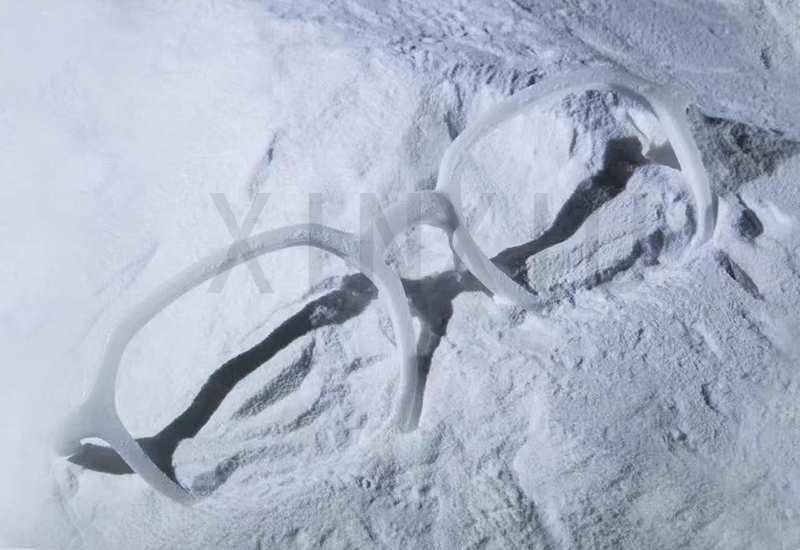
Advantages
SLA (ABS liquid UV curing): Extremely smooth surfaces and rich detail; supports transparent and opaque effects; suitable for appearance models, sealed structures, and validation of fluid path components.
MJF Nylon Printing: Produces robust and durable parts with high dimensional stability and excellent assembly precision; suitable for manufacturing durable jigs and equipment housings, and ideal for small-batch production.
SLM Metal Printing (Aluminum Powder): Capable of producing functional metal parts with complex internal channels; features high strength and good heat resistance, meeting the requirements for precision structures such as threaded and pressure-bearing components.
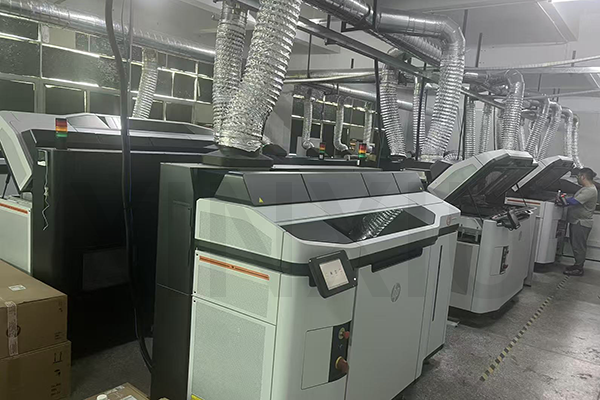
Use Cases
3D printing enables full-range prototype validation prior to CNC machining and mold making, and is applicable across a wide range of industries:
Automotive and Mobility: Validation of air ducts, brackets, housings, and ergonomic structures.
Consumer Electronics and Appliances: Rapid prototyping and assembly testing of complete device housings, eyewear, headphones, watch components, and key aesthetic parts.
Medical and Laboratory Equipment: Validation of housings, fixtures, and fluid manifold structures.
Industrial Automation and Robotics: Functional testing of end-effectors, fixtures, and sensor mounts.