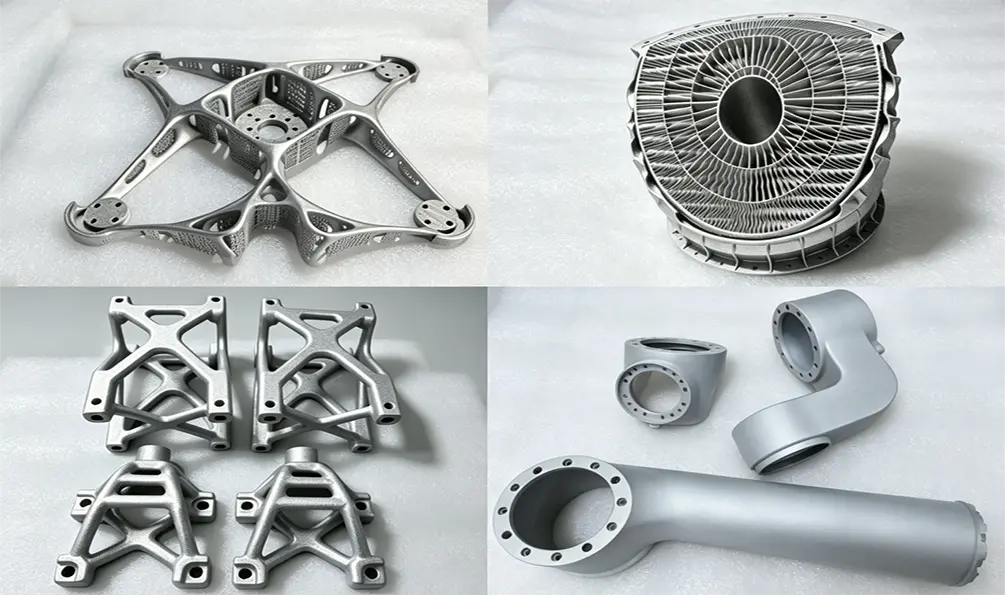
Product Name: Topologically Optimized Lattice Components
Process: SLM Metal 3D Printing + Post-Processing
Applications: Lightweight prototyping, functional validation, and production of monolithic components
Topology-optimized lattice components are widely used in the automotive, high-end equipment, and aerospace industries, balancing multiple performance requirements such as weight reduction, strength, and heat dissipation. Traditional machining cannot achieve hollow lattice structures or integrated structures with complex surfaces, while separating and welding components reduces overall strength. Today, we’ll explore how XINXIU utilizes SLM metal 3D printing technology to achieve the integrated manufacturing of complex topology lattice components, revolutionizing the development and production model for parts.
Component Features
The moving joints of robotic automation equipment must simultaneously support high-strength loads and enable highly flexible, controllable movements. The PA12-CF carbon-fiber-reinforced nylon monolithic 3D printing process perfectly resolves the structural and motion challenges that traditional processes struggle to address.
Component Dimensions and Delivery Efficiency
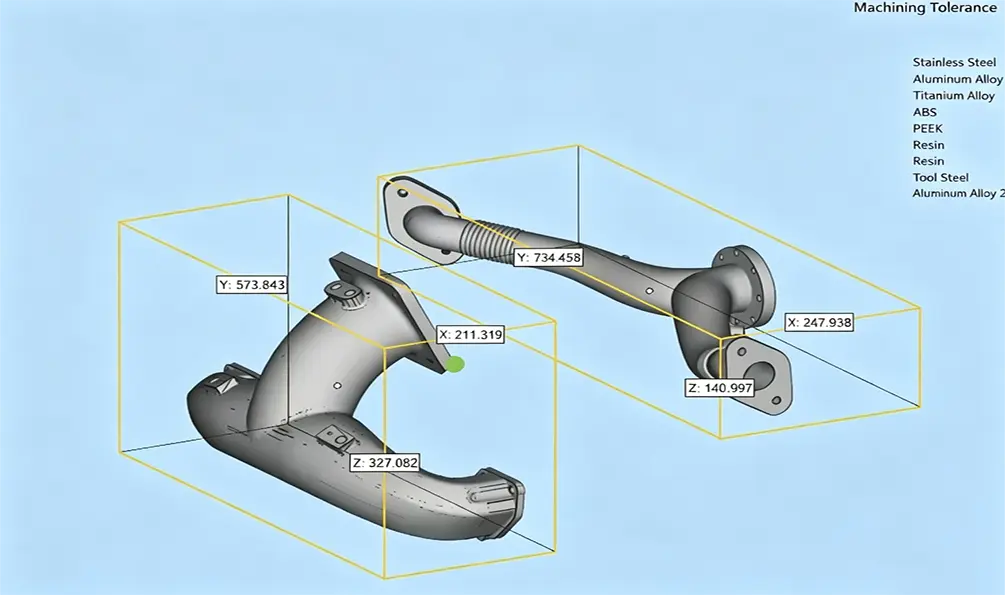
SLM metal-printed topological lattice components support customization in multiple sizes. After printing, they can undergo post-processing such as sandblasting and polishing, with dimensional accuracy controlled within ±0.1 mm. The total delivery cycle for complex parts is only 3–7 days. Compared to traditional machining and welding processes, this approach reduces development cycles by 75%, saves significantly on tooling and fixture costs, eliminates assembly errors caused by joining multiple parts, and greatly accelerates prototype validation and project iteration. It is suitable for the rapid delivery of complex metal components such as topological brackets, irregularly shaped flow channel parts, aerospace structural components, and robot joints.
Printing Material Properties
The components are produced using metal powder printing (with options for aluminum alloy, titanium alloy, or stainless steel). Their mechanical properties are close to those of forged parts, offering high strength, fatigue resistance, and good thermal conductivity. The printed parts feature high detail fidelity and intact thin-walled lattice structures. The surfaces can undergo post-processing treatments such as sandblasting and passivation, making them suitable for practical applications such as assembly and high-temperature operating conditions, and meeting the actual assembly and usage requirements for equipment, automotive, and aerospace components.
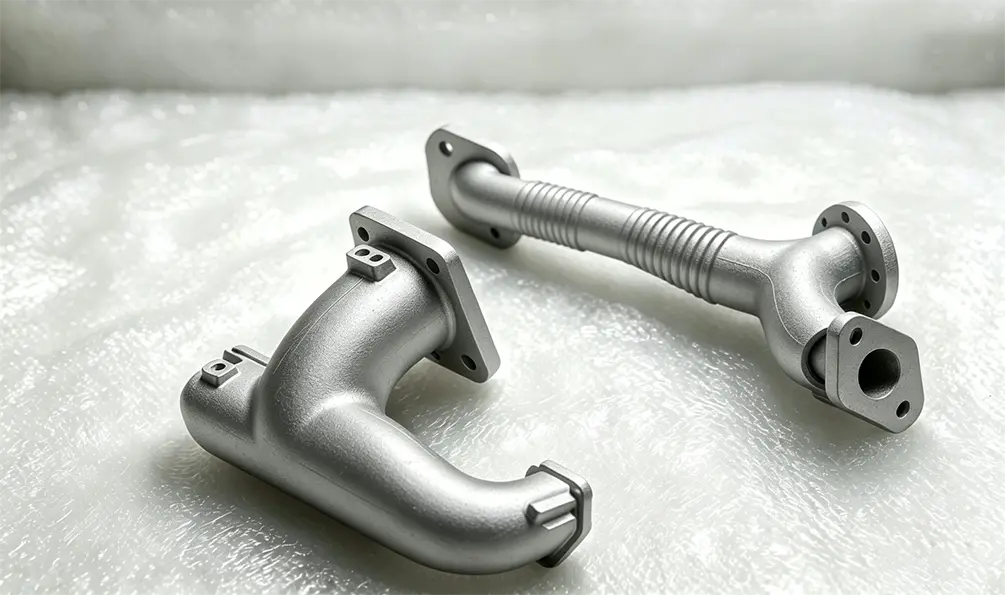
Finished Product
The components are produced using metal powder printing (with options for aluminum alloy, titanium alloy, or stainless steel). Their mechanical properties are close to those of forged parts, offering high strength, fatigue resistance, and good thermal conductivity. The printed parts feature high detail fidelity and intact thin-walled lattice structures. The surfaces can undergo post-processing treatments such as sandblasting and passivation, making them suitable for practical applications such as assembly and high-temperature operating conditions, and meeting the actual assembly and usage requirements for equipment, automotive, and aerospace components.
Summary
SLM metal 3D printing provides highly reliable, lightweight component solutions for the aerospace, automotive, and smart equipment industries. Leveraging SLM’s manufacturing capabilities and a proven metal materials system, this technology overcomes the structural limitations of traditional machining methods, enabling the integrated manufacturing of lattice structures and topologically optimized irregular shapes, thereby shortening the prototype development cycle. For the development of complex metal components, it facilitates a more flexible and efficient product development process.