
PEEK is usually considered when a project moves beyond standard engineering plastics and starts demanding more from the material. Higher temperatures, more aggressive chemicals, tighter tolerances, longer wear life, and greater reliability under load are often the triggers. For B2B buyers, the real decision is not simply whether PEEK is a strong plastic. It is whether PEEK is the most practical material for the part, the process, and the service environment.
What Is PEEK, and Why Is It Called a High-Performance Plastic?
PEEK, short for polyether ether ketone, is a high-performance thermoplastic known for its unusual balance of strength, heat resistance, chemical resistance, and dimensional stability. Unlike many plastics that perform well in only one area, PEEK holds up across multiple performance requirements at the same time.
That is exactly why it is often treated as a material of choice in demanding industries. Buyers are rarely choosing PEEK because it is the cheapest option. They choose it because replacing a failing part, redesigning a short-life component, or dealing with unexpected downtime usually costs far more than the material itself.
In practical terms, PEEK is evaluated when buyers need:
- higher continuous service temperature
- better resistance to aggressive media
- lower wear and friction
- stable performance in precision parts
- a plastic alternative to metal in selected applications
Which PEEK Performance Properties Matter Most to B2B Buyers?
When sourcing PEEK, buyers should focus less on generic material descriptions and more on how the material behaves in the actual application. The following properties usually matter most.
How Does PEEK Perform at High Temperatures?
PEEK is widely valued for maintaining mechanical performance in elevated temperature environments. That makes it useful in parts exposed to heat cycles, heat buildup, or prolonged thermal stress. In many buyer decisions, this is the first reason PEEK enters the shortlist.
How Resistant Is PEEK to Chemicals?
PEEK has strong resistance to many oils, fuels, solvents, and industrial chemicals. This is especially important in environments where parts are not just exposed to one substance, but to a combination of cleaning agents, lubricants, process fluids, and temperature variation.
How Well Does PEEK Handle Wear and Friction?
PEEK is often selected for moving parts, sliding components, and bushings because it can perform well under repeated contact. In real applications, wear resistance is not only about durability. It is also about reducing maintenance frequency and keeping equipment running with less interruption.
How Stable Is PEEK in Precision Parts?
Dimensional stability is one of the reasons PEEK appears in precise industrial and technical components. When a part must keep its shape, fit, and tolerance over time, PEEK is often preferred over plastics that are more sensitive to heat or moisture.
How Low Is PEEK’s Moisture Absorption?
Lower moisture absorption helps PEEK maintain more consistent dimensions and performance in changing environments. For buyers, this matters because absorbed moisture can affect fit, assembly, and long-term part consistency.
How Strong, Rigid, and Creep-Resistant Is PEEK?
PEEK offers a useful combination of rigidity and long-term load resistance. This becomes important in structural parts, fastener-related components, and applications where a plastic part must carry stress without deforming too quickly.
| Key Property | Why Buyers Care | Typical Sourcing Impact |
|---|---|---|
| High temperature resistance | Supports hot environments and thermal stability | Better fit for heat-exposed parts |
| Chemical resistance | Handles oils, solvents, and industrial fluids | Suitable for harsh service conditions |
| Wear performance | Extends service life in moving parts | Lower replacement and maintenance risk |
| Dimensional stability | Protects tolerance and assembly consistency | Better precision and repeatability |
| Low moisture absorption | Reduces property drift in humid environments | More reliable long-term performance |
| Strength and creep resistance | Maintains load-bearing performance | Better for structural and load-bearing use |
Which PEEK Grades Should Buyers Compare Before Choosing?
PEEK is not a single fixed material. Different grades can behave quite differently, especially when it comes to stiffness, wear resistance, machinability, and cost. Grade selection often has more impact than buyers expect.
What Is the Difference Between Unfilled PEEK, Glass-Filled PEEK, and Carbon-Filled PEEK?
Unfilled PEEK is generally chosen when the priority is balanced performance and good machinability. Glass-filled PEEK tends to offer higher stiffness and better dimensional control. Carbon-filled PEEK is often used when improved wear performance, reduced friction, or higher rigidity is needed.
How Does Bearing Grade PEEK Compare with General Grade PEEK?
Bearing grade PEEK is typically selected for sliding, rotating, or friction-heavy applications. Compared with general grade material, it is more focused on reducing wear and extending service life in motion-related parts.
When Does Grade Selection Matter More Than the Base Material?
Grade selection becomes critical when the part is not just made from PEEK, but expected to solve a performance problem. A buyer may need PEEK for heat resistance, but the wrong grade may still fail in a wear-heavy or tolerance-sensitive part.
| PEEK Grade | Main Advantage | Typical Use Case | Buyer Takeaway |
|---|---|---|---|
| Unfilled PEEK | Balanced properties | General precision parts | Good all-round option |
| Glass-filled PEEK | Higher stiffness and stability | Structural components | Better for load-bearing parts |
| Carbon-filled PEEK | Better wear and rigidity | Motion and wear parts | Strong option for friction-heavy use |
| Bearing grade PEEK | Lower friction and wear | Bushings, sliding parts | Best where service life matters |
Where Is PEEK Used in Real B2B Applications?
PEEK is used across industries, but the reason it is selected is often similar: the part must perform reliably where standard plastics are no longer enough.
Why Is PEEK Used in Aerospace and Aviation Components?
Aerospace buyers value weight reduction, thermal stability, and long-term durability. PEEK can help replace metal in selected components while keeping performance stable under demanding conditions.
Why Is PEEK Used in Automotive and E-Mobility Parts?
In automotive and e-mobility applications, PEEK is often used in parts that face heat, vibration, and wear. As systems become more compact and more thermally loaded, the material often needs to do more in less space.
Why Is PEEK Used in Medical and Healthcare Components?
Medical buyers often need materials that combine precision, durability, and resistance to repeated sterilization or cleaning conditions. PEEK is also attractive when a part must stay stable and reliable in repeated use.
Why Is PEEK Used in Semiconductor and Electronics Parts?
Semiconductor and electronics environments can demand low contamination risk, good dimensional stability, and reliable thermal performance. That makes PEEK relevant for technical parts where material consistency matters.
Why Is PEEK Used in Industrial and Chemical Equipment?
Industrial buyers often choose PEEK for components exposed to chemicals, wear, and continuous operation. In these settings, the value of PEEK is usually measured in uptime, not in raw material price.
How Does PEEK Compare with Other Materials in Practical Selection?
PEEK is often compared with materials that are cheaper, easier to process, or already familiar to the engineering team. The right choice depends on what the application actually needs.
How Does PEEK Compare with PPS?
PPS is a strong high-performance polymer, but PEEK generally offers stronger overall performance in more demanding applications. PPS may be a better value choice when the environment is less extreme.
How Does PEEK Compare with PA66?
PA66 is widely used and cost-effective, but it cannot match PEEK in heat resistance, chemical stability, or long-term performance in severe environments.
How Does PEEK Compare with PC?
PC is useful for impact and transparency-related needs, but it is not a substitute for PEEK in high-temperature, wear-heavy, or chemically aggressive applications.
How Does PEEK Compare with PTFE?
PTFE is known for low friction, but it is mechanically different from PEEK. In some applications, PTFE may be too soft or too limited in structural strength, while PEEK offers a better balance of wear and rigidity.
How Does PEEK Compare with Metal?
PEEK can replace metal in selected parts where weight, corrosion resistance, or insulation matter. But it is not a universal substitute. The key is knowing whether the part needs metal-like strength, or simply metal-like reliability in a more efficient form.
| Material | Main Strength | Main Limitation | Best Fit |
|---|---|---|---|
| PEEK | Balanced high-performance properties | Higher cost | Demanding technical parts |
| PPS | Good heat and chemical resistance | Lower overall performance than PEEK | Cost-sensitive technical applications |
| PA66 | Low cost and easy processing | Limited heat and chemical resistance | General industrial parts |
| PC | Impact resistance | Weak fit for harsh heat/chemical use | Non-critical structural parts |
| PTFE | Very low friction | Lower mechanical strength | Sliding and sealing-related use |
| Metal | High structural strength | Heavier, corrosion or cost issues | Load-heavy conventional designs |
When Is PEEK the Right Choice, and When Is It Over-Specified?
PEEK is powerful, but that does not mean every project needs it. In sourcing, one of the biggest mistakes is paying for performance the application will never use.
When Is Heat Resistance the First Priority?
If the part will see continuous high temperature, repeated thermal cycling, or heat concentration near motors, electronics, or process systems, PEEK becomes more attractive.
When Does Frequent Chemical Exposure Justify PEEK?
When parts are exposed to solvents, oils, fuels, or cleaning chemistry, a lower-cost material may fail early even if it looks fine at first. In those cases, PEEK can reduce replacement risk.
When Does Wear Life Matter More Than Initial Cost?
If a component sits in a moving system, friction and wear should be evaluated alongside material price. A more expensive material may still be cheaper over the life of the machine.
When Is PEEK a Real Metal Replacement?
PEEK makes sense as a metal replacement when the part benefits from lighter weight, corrosion resistance, or insulation, and when the load case stays within what the polymer can handle.
When Can a Lower-Cost Polymer Still Meet the Requirement?
If the application is not exposed to heat, aggressive media, or repeated mechanical stress, a lower-cost polymer may be enough. In many projects, this is the more economical and practical choice.
What Should Buyers Know About PEEK Processing for CNC Machining and Injection Molding?
PEEK performs well, but it is not forgiving if processing is careless. The material can deliver excellent results, but only when the process is well controlled.
Why Does PEEK Require Proper Process Control?
Because PEEK is a technical material, processing mistakes often show up in tolerance issues, warping, surface inconsistency, or premature part failure. The material itself may be capable, but the result still depends heavily on how it is machined or molded.
What Should Buyers Consider in CNC Machining?
For CNC parts, buyers should pay attention to fixture stability, tool selection, cutting strategy, and heat control. Since PEEK is often used in precision parts, even small processing errors can affect fit and function.
What Should Buyers Consider in Injection Molding?
For injection molding, melt temperature, mold design, cooling, and shrinkage behavior all matter. A PEEK part that looks fine visually may still have hidden issues if the molding process is not tuned correctly.
How Do Wall Thickness, Shrinkage, and Tolerance Affect the Part?
These factors directly affect whether the part performs as designed. Uneven wall thickness can create stress or warpage. Shrinkage must be accounted for early. Tolerance requirements should be aligned with the actual material behavior, not just the drawing.
Why Do Drying, Temperature, and Surface Finish Matter?
Material drying and thermal control help avoid defects and inconsistency. Surface finish is also important because many PEEK parts are expected to work in precision assemblies or wear applications where surface quality affects performance.
What Should Be Checked Before Mass Production of PEEK Parts?
Before full production, buyers should validate both the material and the design. A small mistake at this stage is much cheaper than a mistake after tooling or volume production starts.
Why Should Functional Testing Come First?
Functional testing confirms whether the part actually performs in the intended environment. For technical parts, this is often more useful than relying on specification sheets alone.
Why Are Small-Batch Trial Parts Important?
Trial parts help reveal processing issues, tolerance drift, assembly problems, and real-world fit before the project moves into larger commitments.
Why Is a DFM Review Necessary Before Tooling?
A DFM review can uncover issues that are easy to miss on paper. For PEEK parts, this is especially valuable because material behavior, part geometry, and processing conditions all affect the final outcome.
Why Do Material Certification and Traceability Matter?
For regulated or high-reliability industries, documentation is part of the product. Buyers often need proof of material consistency, lot traceability, and quality control before approving production.
How Should Buyers Evaluate a PEEK Supplier?
A good supplier should do more than quote material or machine a part. The supplier should help reduce risk.
Can the Supplier Support Prototype-to-Production Development?
This matters because many projects do not move in a straight line. A supplier that can support early samples, design adjustments, and production scaling can save time and rework.
Do They Offer CNC, Rapid Tooling, and Injection Molding?
A supplier with multiple process capabilities can match the manufacturing route to the stage of the project, which is often more efficient than forcing one process for every situation.
Can They Provide DFM Suggestions?
DFM support shows whether the supplier understands not just manufacturing, but also how to make a part more stable, more cost-effective, and easier to produce.
What Quality Control and Documentation Do They Provide?
Buyers should look for inspection consistency, measurable QC procedures, and the ability to provide documentation when needed.
What Are Their Lead Time and Sampling Capabilities?
Sampling speed matters because technical projects often depend on fast iteration. A supplier that can move quickly from concept to trial part can shorten the overall development cycle.
How Does XINXIU Support PEEK Projects from Prototype to Production?
For buyers who need both engineering support and manufacturing flexibility, integrated support is often the most practical way to move a PEEK project forward.
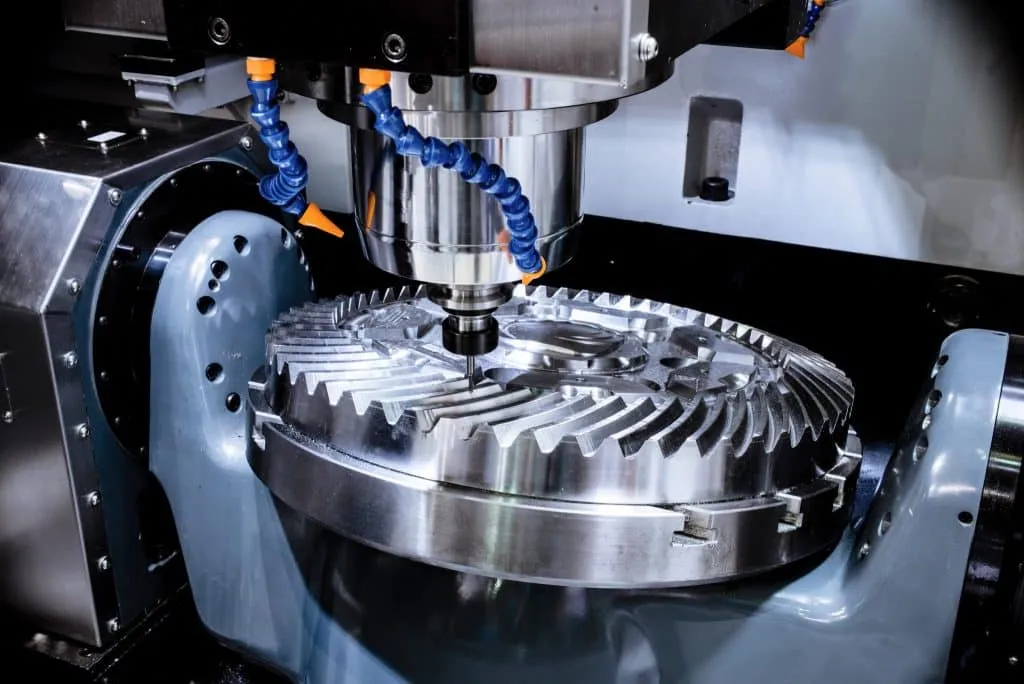
How Does XINXIU Support PEEK CNC Machining?
XINXIU can help produce precision PEEK parts for validation, testing, and functional use, especially where geometry and tolerances need closer control.
How Does XINXIU Handle Rapid Tooling for Early Validation?
Rapid tooling is useful when buyers want to test a design before making full tooling decisions. It reduces risk and helps identify issues earlier.
How Does XINXIU Support Injection Molding for Trial and Mass Production?
For projects that move beyond prototypes, injection molding supports more consistent volume production and can help reduce unit cost over time.
How Does XINXIU Provide One-Stop DFM and Quality Control?
A one-stop workflow can make the sourcing process easier, especially for teams that need faster communication, fewer handoffs, and more predictable results.
What Are the Most Common Questions Buyers Ask About PEEK?
What Is PEEK Used For?
PEEK is used in technical parts that need high heat resistance, chemical resistance, wear performance, and dimensional stability.
Is PEEK Difficult to Machine or Mold?
It can be, compared with standard plastics. Good process control matters because the material is used in parts where precision is usually important.
Why Is PEEK More Expensive Than Standard Plastics?
Because the raw material and processing expectations are higher. In many cases, the cost is justified by longer service life and reduced failure risk.
Is PEEK Suitable for Prototypes?
Yes. PEEK is often used for prototypes when the final application demands performance validation under realistic conditions.
How Do I Know Whether PEEK Is the Right Material for My Part?
The best way is to compare the part’s actual operating temperature, chemical exposure, wear demand, tolerance requirements, and expected service life.
What Is the Difference Between Different PEEK Grades?
Different grades are designed for different balance points. Some are better for stiffness, some for wear, and some for general use.
Can PEEK Replace Metal in My Application?
Sometimes, yes. But only when the load, environment, and design requirements fit what the polymer can realistically handle.