PETG Material Applications: Properties, Uses, and 3D Printing Guide
PETG is a widely used thermoplastic material for 3D printing, prototypes, packaging, transparent components, and custom plastic parts. It offers a useful balance of toughness, impact resistance, chemical resistance, and ease of processing.
For product development, PETG can be particularly useful when a prototype needs more practical mechanical performance than a typical appearance model. However, choosing PETG should not be based on the material name alone. Operating temperature, mechanical loads, chemical exposure, surface requirements, production volume, and manufacturing process all need to be considered.
At XINXIU Precision Technology, material selection is evaluated together with product geometry, manufacturing process, application requirements, and production quantity. Our manufacturing capabilities include 3D printing, CNC machining, vacuum molding, injection molding, rapid tooling, and other custom manufacturing processes.
What Is PETG Material?
PETG stands for Polyethylene Terephthalate Glycol-modified.
It is a modified polyester commonly used in industrial manufacturing and additive manufacturing. PETG is available in different grades and formulations, so its exact mechanical, thermal, chemical, and regulatory properties can vary.
For 3D printing, PETG is commonly selected when a project requires good toughness, impact resistance, relatively easy processing, good layer adhesion, chemical resistance, and transparent or translucent appearance options.
The appropriate PETG grade should always be selected according to the actual application.
Key PETG Material Properties
Understanding PETG material properties is important before selecting it for a prototype or production component.
Good Toughness: PETG generally offers good toughness compared with many rigid or brittle materials used for basic prototypes. This makes it suitable for functional models, brackets, housings, fixtures, and other components that may experience moderate impact.
Good Impact Resistance: PETG can withstand everyday mechanical impacts better than some common prototype materials. This can be useful when prototypes need to be assembled, handled, or tested repeatedly.
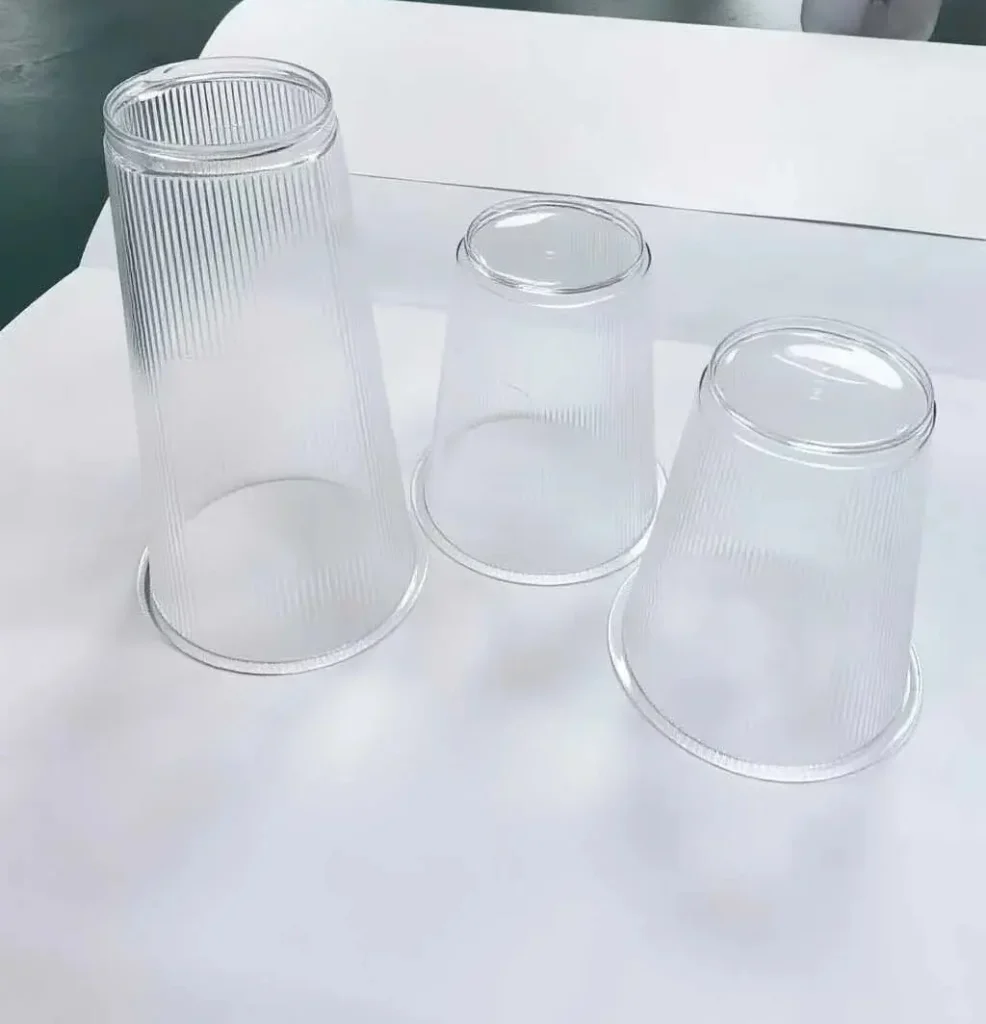
Transparency Options: PETG is available in clear and translucent formulations. These materials can be used for visual prototypes, protective covers, housings, and other components where partial visibility is required. However, 3D-printed PETG should not automatically be considered optically clear because layer lines, internal gaps, surface roughness, and printing parameters can reduce light transmission.
Chemical Resistance: PETG provides resistance to many common chemicals, but actual compatibility depends on the chemical, concentration, exposure time, temperature, and material grade. For products exposed to solvents or aggressive chemicals, compatibility testing is recommended.
Processability: PETG can be processed using several manufacturing methods, including FDM 3D printing, injection molding, thermoforming, and extrusion. The appropriate process depends on production volume, geometry, dimensional requirements, and final application.
What Is PETG Used For?
PETG has a broad range of potential applications. The most suitable application depends on the specific grade and manufacturing process.
1. PETG for 3D Printing
One of the most common uses of PETG is FDM 3D printing. PETG can be used to manufacture functional prototypes, product housings, mounting brackets, clips and connectors, fixtures, jigs, protective covers, assembly verification parts, small-batch components, and design validation models.
2. PETG for Product Prototypes
PETG can be useful when a prototype needs more than visual confirmation. Engineers may use PETG prototypes to check product dimensions, assembly relationships, component clearance, mechanical interfaces, ergonomics, basic functional performance, and installation procedures.
3. PETG for Electronic and Equipment Housings
PETG can be considered for prototype housings and selected plastic components used in electronics and equipment development, including electronic enclosures, instrument housings, control panels, protective covers, sensor housings, and cable-management components.
4. PETG for Transparent and Translucent Parts
Clear or translucent PETG can be useful for protective covers, display components, equipment windows, transparent housings, visual prototypes, and light-diffusing structures. If high optical clarity is required, another manufacturing process may be more suitable.
5. PETG for Packaging and Consumer Products
Potential applications include display packaging, protective packaging, transparent containers, product organizers, consumer-product prototypes, and custom storage components. For food-contact applications, the specific resin grade, additives, manufacturing process, and applicable regulatory requirements must be verified.
6. PETG for Medical Product Prototypes
PETG can be used for certain medical-product prototypes and non-implantable applications, including medical equipment housings, diagnostic equipment prototypes, protective components, device enclosures, demonstration models, and assembly validation parts. A standard PETG filament should not automatically be considered a medical-grade material.
7. PETG for Automotive Prototypes
PETG can be used during automotive product development for interior component prototypes, sensor housing prototypes, mounting brackets, trim prototypes, installation fixtures, and functional validation parts. Components exposed to high temperatures, continuous loads, vibration, UV exposure, or demanding chemicals may require more specialized engineering plastics.
PETG vs PLA vs ABS
PETG is often compared with PLA and ABS when selecting a material for 3D printing.
Comparison Table
| Property | PETG | PLA | ABS |
| Toughness | Good | Moderate | Good |
| Impact Resistance | Good | Moderate | Good |
| Ease of Printing | Moderate | Easy | More demanding |
| Transparency Options | Available | Available | Limited |
| Heat Resistance | Moderate | Lower | Moderate |
| Functional Prototypes | Suitable | Suitable | Suitable |
| Outdoor Applications | Grade dependent | Limited | Grade dependent |
This comparison is only a general guide. Actual performance depends on the material grade, printing parameters, part geometry, and application environment.
When Should You Avoid PETG?
PETG is versatile, but it is not suitable for every application.
High-temperature performance: If a component will continuously operate at elevated temperatures, a higher-temperature engineering plastic may be required.
High long-term mechanical loads: Like many thermoplastics, PETG can experience creep under continuous loading. Structural parts should therefore be evaluated according to the actual load and service conditions.
High chemical exposure: Strong solvents or aggressive chemicals may cause stress cracking or material degradation depending on the specific PETG grade.
High optical clarity: For optical applications, the surface quality and internal structure of FDM parts may not meet the required optical performance.
Specialized medical applications: Medical applications may require specific certified materials and manufacturing controls.
PETG 3D Printing vs Other Manufacturing Processes
Material selection and manufacturing process should be considered together.
For prototypes, FDM PETG 3D printing can be a practical option for quick functional prototypes and design validation.
For small-batch functional parts, manufacturers can evaluate 3D printing, CNC machining, vacuum molding, and rapid tooling.
For larger production volumes, injection molding may become more appropriate when production quantities increase and consistent repeatability becomes important.
XINXIU provides manufacturing solutions from prototype development to production, including 3D printing, CNC machining, vacuum molding, rapid tooling, and injection molding.
How to Choose the Right PETG Manufacturing Solution
Before starting a PETG project, it is useful to provide the following information:
1. 3D CAD file
2. Required quantity
3. Expected operating temperature
4. Mechanical load
5. Chemical exposure
6. Surface finish requirements
7. Dimensional tolerance
8. Color requirements
9. Final application
10. Expected production volume
This information allows the manufacturing process and material to be evaluated together.
PETG Material Selection at XINXIU Precision Technology
At XINXIU Precision Technology, we evaluate material selection together with product geometry, manufacturing technology, production volume, surface requirements, and end-use conditions.
Our one-stop manufacturing capabilities include 3D Printing, CNC Machining, Vacuum Molding, Injection Molding, Rapid Tooling, Die Casting, Sheet Metal Fabrication, Extrusion Molding, and Liquid Silicone Molding.
Our engineering team can review CAD files and help determine whether 3D printing, CNC machining, vacuum molding, rapid tooling, or injection molding is appropriate for a specific project.
If you have a STEP, STP, IGES, STL, or other 3D CAD file, send it together with your quantity and application requirements. We can evaluate the material and manufacturing process for your project.
Request a quote for your PETG prototype or custom plastic part today.
FAQ
Is PETG good for 3D printing?
Yes. PETG is commonly used for functional prototypes and selected end-use 3D-printed parts because it provides a useful combination of toughness, impact resistance, and processability.
Is PETG stronger than PLA?
PETG and PLA have different performance characteristics. PETG is generally more suitable when toughness and impact resistance are important, while PLA can be attractive for easy printing and rigid prototypes. The actual result depends on the material grade and printing conditions.
Is PETG suitable for functional prototypes?
Yes. PETG can be used for many functional prototypes, including housings, brackets, fixtures, covers, and assembly-validation parts.
Can PETG be used for transparent parts?
Clear PETG can produce transparent or translucent components, but FDM printing introduces layer lines and internal structures that can reduce optical clarity.
Is PETG suitable for high-temperature applications?
PETG has limitations at elevated temperatures. For continuous high-temperature applications, an engineering plastic with higher temperature resistance may be more appropriate.
Can XINXIU manufacture custom PETG parts?
Yes. XINXIU can evaluate PETG-related prototype and custom-part projects and recommend an appropriate manufacturing process based on the CAD model, quantity, functional requirements, and application.