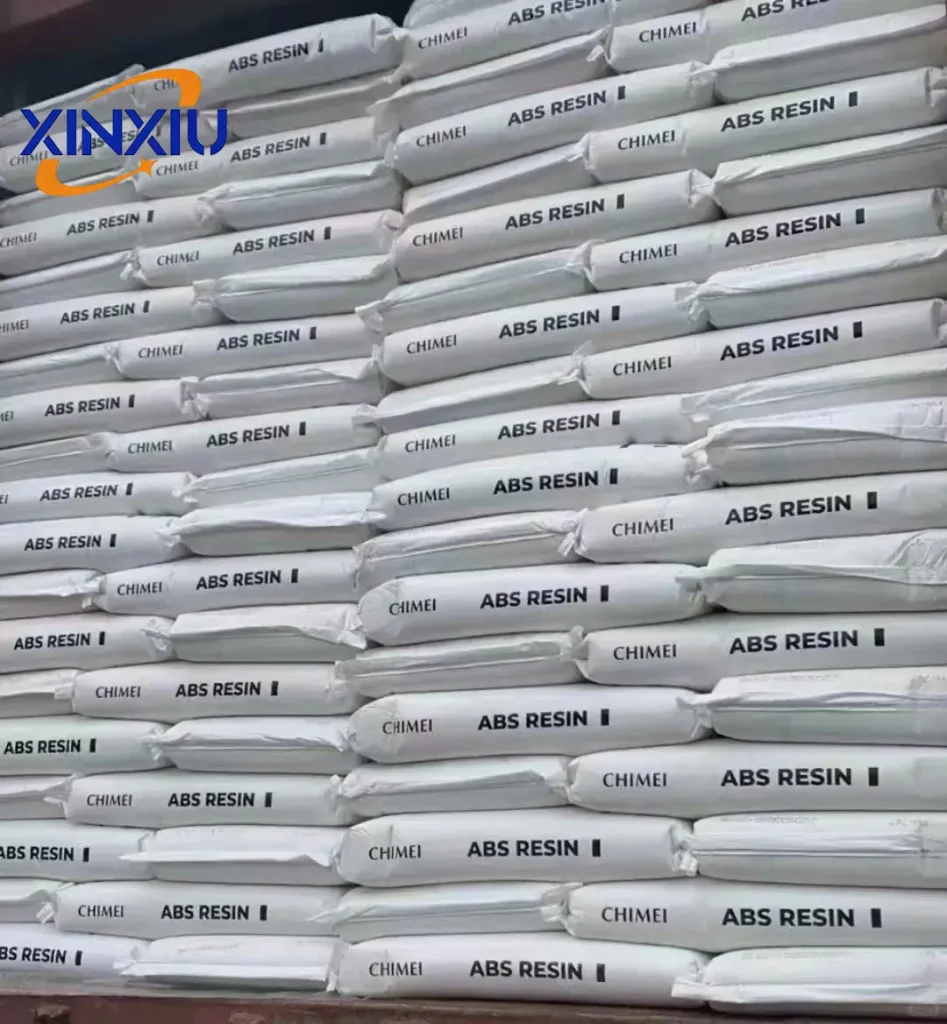
1. What Products Are Suitable for ABS 757 Injection Molding?
ABS is one of the commonly used engineering plastics for industrial products and consumer electronics. It offers a useful combination of rigidity, impact resistance, surface appearance, and processing adaptability, making it suitable for housings, structural components, functional parts, and customized plastic components.
Common applications include:
• Household appliance housings
• Electronic product structural parts
• Consumer electronics components
• Automotive interior plastic parts
• Industrial equipment housings
• Instrument and meter components
• Daily-use and structural plastic parts
Different products have different performance requirements. Appearance parts may place greater emphasis on surface quality, weld lines, and sink marks, while structural parts may focus more on strength, dimensional stability, and assembly accuracy. The material and molding process should therefore be evaluated according to the actual application before mold production begins.
2. What Should Be Checked Before ABS 757 Injection Molding?
ABS can be affected by moisture. If the material absorbs excessive moisture during storage or transportation, defects such as silver streaks, gas marks, and surface imperfections may occur.
Before production, the material grade and the supplier’s technical documentation should be checked to determine whether pre-drying is required and what drying conditions are appropriate.
Other checks should include:
• Correct material grade
• Moisture condition of the resin
• Colorant or masterbatch ratio
• Regrind usage requirements
• Material batch consistency
For parts with tight dimensional requirements, trial molding should be performed before mass production instead of relying only on general processing parameters.
3. Product Design Directly Affects Injection Molding Quality
Many injection molding defects originate at the product design stage. If a part has significant wall-thickness variations, sharp corners, excessively deep ribs, or difficult demolding features, adjusting molding parameters alone may not completely solve the problem.
Wall Thickness
Avoid sudden changes in wall thickness whenever possible. Large thickness differences can contribute to sink marks, warpage, internal stress, and uneven cooling.
Corner Radii
Appropriate radii can improve melt flow and reduce stress concentration, especially around corners, ribs, bosses, and deep cavities.
4. Mold Design Is Critical for ABS Injection Molding
The final quality of an ABS injection molded part is closely related to mold design.
Gate Design
Gate location affects melt flow, filling behavior, and weld-line position. For appearance-critical parts, visible weld lines and gate marks should be positioned away from key cosmetic surfaces whenever possible.
Venting
Insufficient venting can lead to burning, short shots, gas marks, filling difficulties, and localized surface defects. Proper venting should be considered in areas where air may become trapped.
Cooling System
Uniform mold cooling influences dimensional stability, cycle time, warpage, and production efficiency. For precision parts, the cooling layout should be designed according to the product geometry and mold structure.
5. ABS 757 Injection Parameters Should Not Simply Be Copied
The appropriate molding conditions vary according to the specific ABS grade, part geometry, mold design, and machine conditions. General parameters found online can be used as initial trial references, but they should not automatically become mass-production standards.
During molding trials, the process may be adjusted progressively:
Barrel temperature → Mold temperature → Injection speed → Injection pressure → Holding pressure → Cooling time
If short shots occur, the cause may involve material flow, gate design, venting, or injection conditions rather than injection pressure alone. If sink marks occur, wall thickness, holding pressure, cooling, and mold temperature should be evaluated together.
This process-based approach is more suitable for stable production than simply applying fixed parameters.
6. Common ABS Injection Molding Defects and Improvement Directions
Silver streaks — Possible causes include moisture and venting issues. Check material drying and mold venting.
Sink marks — Possible causes include excessive wall thickness or insufficient holding. Optimize part structure and holding conditions.
Warpage — Possible causes include uneven cooling or unsuitable part structure. Improve cooling and product design.
Short shots — Possible causes include insufficient flow or poor venting. Check gates, vents, and injection conditions.
Weld lines — These can occur where separate melt fronts meet. Review gate location and melt-flow direction.
Burn marks — Often related to trapped air. Improve mold venting.
Flash — May be related to clamping or mold-fitting conditions. Check mold accuracy and molding pressure.
7. Control the Project from DFM Analysis
For customized injection molding projects, DFM (Design for Manufacturing) analysis should be carried out before mold production.
DFM can help evaluate:
• Product wall thickness
• Draft angles
• Rib structures
• Boss design
• Gate locations
• Ejection strategy
• Parting lines
• Venting positions
• Potential sink-mark areas
• Potential deformation areas
Identifying these issues before mold machining can reduce later mold modifications, development time, and unnecessary costs.
8. From Mold Development to Mass Production
A typical ABS injection molding project can include:
Product Design → DFM Analysis → Mold Design → Mold Machining → Mold Assembly → T0/T1 Trial → Sample Approval → Process Optimization → Mass Production → Inspection
During the first molding trial, product dimensions, appearance, and molding conditions should be recorded. The results can then be used to optimize the process.
For precision injection molded components, stable production parameters and inspection standards help reduce variation between production batches.
9. Customized ABS Injection Molding Solutions from Xinxiu Precision
Xinxiu Precision Technology Co., Ltd. focuses on precision molds and customized injection molding. According to the customer’s product structure, material requirements, and production volume, we provide corresponding mold development and injection molding solutions.
Our services include:
• ABS injection molding
• PC/ABS injection molding
• PP, PA, PC, POM and other material injection molding
• Precision injection molds
• Rapid tooling
• Custom export molds
• Product DFM analysis
• Injection molded product development
• Small-batch production
• Mass production From product design evaluation and mold development to trial molding and mass production, we focus on the relationship between part design, mold structure, and actual molding performance. This helps reduce repeated development work and improve project efficiency.