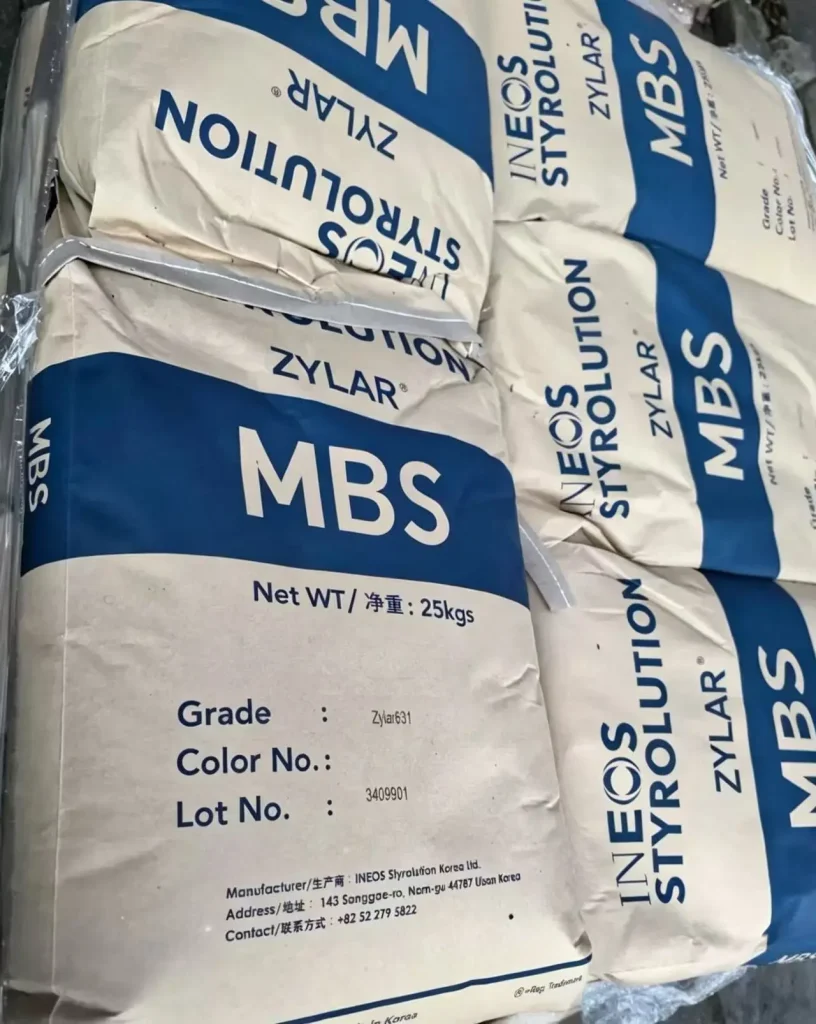
When developing transparent plastic components, material selection can have a major impact on product appearance, durability, chemical resistance, and manufacturing efficiency.
MMBS is a transparent thermoplastic material that can be considered for applications where a balance between transparency, impact resistance, lightweight construction, and chemical resistance is required. Compared with conventional transparent plastics, it offers a different combination of performance characteristics that can make it suitable for selected medical, cosmetic, consumer, and industrial products.
At XINXIU Precision Technology, we evaluate material characteristics together with product geometry, production volume, mold structure, surface requirements, and end-use conditions to help customers select an appropriate injection molding solution.
What Is MMBS?
MMBS is a transparent thermoplastic based on a modified polymer structure containing methyl methacrylate and butadiene-styrene components.
It is important to distinguish injection-molding-grade MMBS from MBS additives used to modify PVC. Injection-grade MMBS can be processed as an independent thermoplastic material to produce transparent molded components.
Manufacturers find MMBS particularly useful for applications that require both transparency and impact resistance.
Key Advantages of MMBS
1. Good Optical Transparency
MMBS can provide high light transmission and a clear visual appearance, making it suitable for transparent housings, containers, viewing components, and other products where appearance is important.
MMBS competes with other transparent plastics in applications that require both appearance and toughness.
2. Lightweight Construction
With a relatively low density, MMBS can help reduce component weight compared with some conventional engineering plastics.
This can be useful for portable products, cosmetic packaging, medical components, and consumer products where lightweight design is a priority.
3. Good Resistance to Alcohol and Common Chemicals
One of the potential advantages of MMBS is its resistance to commonly encountered chemicals such as alcohol-based cleaning solutions and certain household or cosmetic products.
This characteristic makes it worth considering for products that require frequent cleaning or contact with mild chemical substances.
However, always confirm material compatibility based on the actual chemical environment and service conditions.
4. Balanced Impact Performance
Unlike some brittle transparent plastics, MMBS can provide better impact resistance while maintaining a clear appearance.
This can be advantageous for thin-wall components, transparent covers, small containers, and consumer products that may experience occasional drops or mechanical impact.
5. Efficient Injection Molding
Manufacturers can typically process MMBS at moderate molding temperatures..
This can help manufacturers achieve efficient cycle times and reduce the thermal load placed on molds and processing equipment.
Manufacturers should optimize injection temperature, mold temperature, pressure, cooling time, and holding conditions based on the selected material grade and product design.
6. Good Dimensional Stability
Properly controlled molding conditions can provide stable dimensions and consistent production results.
For precision injection molding, however, dimensional accuracy depends not only on the material but also on:
- Mold design
- Shrinkage characteristics
- Gate location
- Cooling system
- Injection parameters
- Part geometry
- Mold temperature
Therefore, manufacturers should consider material selection and mold design as part of the same process..
Where Can MMBS Be Used?
MMBS can be considered for a range of transparent injection-molded products.
Medical Components
Potential applications include:
- Medical device housings
- Transparent components
- Diagnostic equipment parts
- Disposable medical accessories
- Observation windows
For medical applications, the specific material grade must meet the required regulatory and sterilization standards.
Cosmetic and Personal Care Products
Its transparency and chemical resistance can make MMBS suitable for:
- Cosmetic containers
- Transparent housings
- Small packaging components
- Beauty-device components
- Personal-care accessories
The material can provide a combination of visual appeal and practical durability.
Consumer Products
Manufacturers can also consider MMBS for:
- Transparent covers
- Small appliance components
- Household products
- Storage containers
- Transparent accessories
Its lightweight characteristics can be beneficial when product designers want to reduce overall component weight.
Electronics and Instrument Housings
For selected low-temperature applications, MMBS can be used for transparent covers, viewing windows, and other molded components where optical appearance is important.
Manufacturers should consider the operating temperature and environmental conditions before selecting the material.
MMBS Compared with Other Transparent Plastics
There is no single transparent plastic that is ideal for every application. Material selection should be based on the actual requirements of the finished product.
MMBS vs. PC
MMBS can offer advantages in lightweight design and certain chemical environments, while PC generally provides higher heat resistance and stronger mechanical performance.
For products exposed to elevated temperatures or demanding mechanical loads, PC may be more appropriate.
MMBS vs. PMMA
PMMA is well known for its excellent optical clarity and surface appearance.
MMBS can provide better impact resistance in certain applications, making it worth considering when the product requires both transparency and improved toughness.
MMBS vs. PCTG
PCTG is another commonly used transparent thermoplastic.
Depending on the application, MMBS may offer advantages in processing efficiency and chemical resistance, while PCTG can provide different levels of toughness and thermal performance.
The final selection should be based on the specific product requirements rather than material name alone.
MMBS Injection Molding Considerations
Successful MMBS injection molding requires more than simply selecting the right material.
Material Preparation
Moisture and material handling should be properly controlled before molding.
Material drying conditions should follow the supplier’s technical data sheet because recommended drying temperature and time can vary between grades.
Injection Temperature
The processing temperature needs to be optimized according to the material grade, machine configuration, mold structure, and product geometry.
Excessive temperatures may affect material appearance or properties, while insufficient temperature can result in poor filling and surface defects.
Mold Temperature
A properly controlled mold temperature can improve:
- Surface quality
- Dimensional stability
- Filling performance
- Weld-line appearance
- Cycle consistency
Injection and Holding Pressure
Injection pressure and holding pressure should be adjusted according to the part geometry and gate design.
Excessive pressure may increase internal stress, while insufficient pressure can lead to shrinkage, sink marks, or incomplete filling.
Cooling System
An efficient and balanced cooling system is especially important for transparent precision parts.
Uneven cooling can cause:
- Warpage
- Dimensional variation
- Internal stress
- Optical defects
Therefore, cooling-channel design should be considered during mold development.
How XINXIU Supports Transparent Injection Molding Projects
For transparent plastic products, material selection is only one part of the manufacturing process.
At XINXIU Precision Technology, we can support projects from product development and mold design to injection molding and subsequent production processes.
Our manufacturing services include:
- Injection molding
- Rapid tooling
- Custom mold manufacturing
- CNC machining
- Die casting
- Rapid prototyping
- Vacuum forming
- Liquid silicone molding
- 3D printing
- Surface finishing
For new projects, our engineering team can evaluate the 3D model, material requirements, wall thickness, draft angles, gate locations, parting lines, expected production volume, and dimensional requirements before mold manufacturing.
This early-stage evaluation helps identify potential molding problems and improve manufacturability before production begins.
Conclusion
MMBS can be a useful option for transparent injection-molded components where lightweight construction, impact resistance, chemical resistance, and visual appearance need to be balanced.
However, material selection should always be based on the complete application environment. Factors such as operating temperature, chemical exposure, mechanical loads, sterilization requirements, product geometry, and expected service life should all be considered.
For customers developing transparent plastic components, choosing the right material together with an appropriate mold and injection molding process can help improve product quality, production consistency, and overall manufacturing efficiency.
Need a custom transparent injection molded part or prototype mold? Contact XINXIU Precision Technology to discuss your project requirements.