
压铸机的类型压铸机类型热室压铸机热室压铸(又称鹅颈压铸)具有生产周期短、适用于锌镁等低熔点合金(≤450℃)的特点。原材料在机器内置炉内加热,熔融金属通过鹅颈结构以高压高速直接注入模具。由于工艺温度较低,模具寿命得以延长。不适用于铝合金。 冷室压铸机“冷室”指的是熔炉并非集成在压铸机内部,而是指铸造过程并非在低温环境下进行。原材料在单独的熔炉中熔化,然后计量送入压铸机的进料室,最后通过喷嘴注入模具。虽然循环时间较长,但冷室能够承受更高的温度,因此适用于铝、铜和高熔点镁合金(约600℃或更高)等高熔点材料。
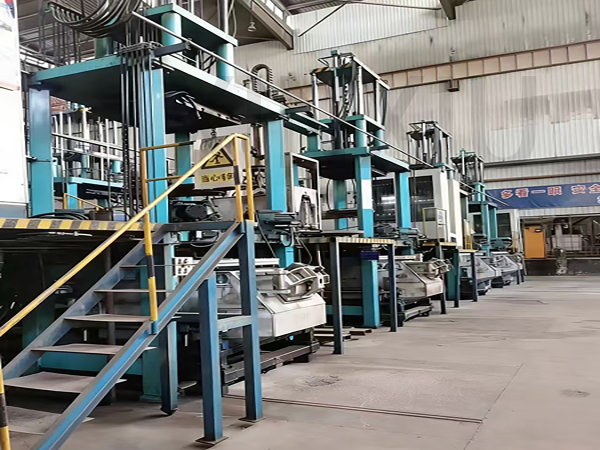
Low-pressure die casting
Process Principle: In low-pressure die casting, molten metal is gently forced from a sealed holding furnace into the mold via a feed tube using low-pressure gas (0.01–0.1 MPa), allowing the molten metal to fill the mold from the bottom up and solidify under pressure.
Our Advantages: XINXIU specializes in low-pressure die casting. By precisely controlling pressure and filling speed, we ensure dense casting structures, excellent mechanical properties, high yield rates, and dimensional stability. With a metal recovery rate of up to 95%, this process is particularly suitable for large, thin-walled, and complex castings such as automotive wheels, cylinder heads, and intake manifolds.
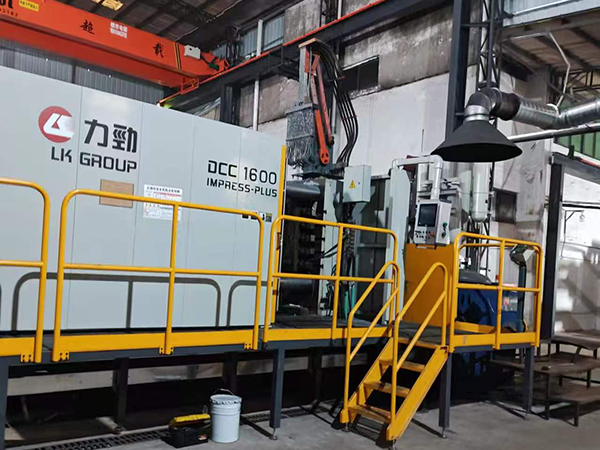
High-pressure die casting
Process Principle: High-pressure die casting is a process in which molten metal is injected at high speed into precision molds under extremely high pressure (10–200 MPa). The filling time is measured in milliseconds, allowing the metal to solidify and take shape rapidly. XINXIU is equipped with over 10 die casting machines of various tonnages and employs advanced automated production to achieve high-precision batch production of thin-walled (minimum 0.5 mm) and complex-structured parts.
Our Technical Advantages: High production efficiency (capable of producing multiple parts per minute), high surface finish, dimensional accuracy up to Grade 4–6, and minimal machining allowance. Suitable for high-volume production of thin-walled, complex-structured non-ferrous metal parts, widely used in the automotive, telecommunications, and electronics industries.
Semi-solid die casting
Process Principle: Semi-solid die casting heats the metal to a state where solid and liquid coexist (solid phase ratio of 30%–60%). After forming a semi-solid slurry, it is injected into the mold at low speed (filling speed of 1–8 m/s, only 1/10 that of conventional die casting), resulting in laminar flow that minimizes turbulent entrainment of air. Simultaneously, applying high specific pressure during the pressurization stage ensures excellent shrinkage compensation for the casting.
Our Advantages: XINXIU employs semi-solid die casting technology to precisely control the solid phase fraction and slurry temperature, ensuring dense, shrinkage-free castings with mechanical properties approaching those of forged parts. Mold life is increased by 60%, and cycle times are reduced by 25%–40%. This process is particularly suitable for demanding applications such as lightweight automotive structural components, parts requiring high strength and toughness, and 3C electronic enclosures.
Vacuum die casting
Process Principle: Vacuum die casting removes gases from the mold cavity prior to filling (achieving a vacuum level of over 90%), allowing the molten metal to solidify under near-vacuum conditions, thereby significantly reducing porosity and oxidation defects.
Our Advantages: XINXIU employs advanced vacuum die casting technology, combined with a two-stage vacuum extraction system, to ensure a high vacuum level in the mold cavity. Casting porosity can be reduced to below 1%, resulting in high density. The castings are suitable for heat treatment and welding, with significantly improved mechanical properties. They are ideal for automotive structural components, safety parts, and parts requiring high airtightness.
Die Casting DFM and Review Discussions
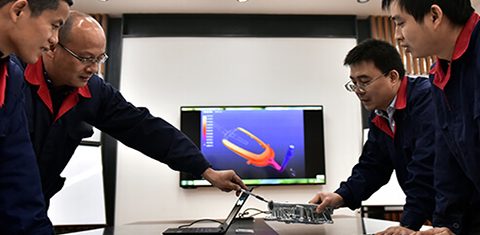
The XINXIU engineering team gets involved early in the product development process. Drawing on years of practical die casting experience, we provide recommendations for structural optimization and wall thickness design, assist with drawing revisions, and deliver detailed DFM analysis reports for your review.
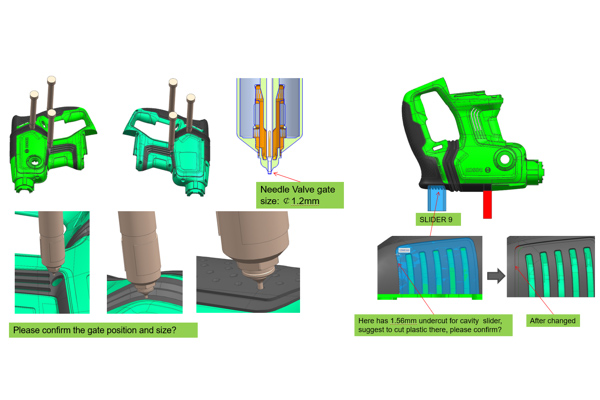
We conduct professional mold flow analysis and high-precision simulation of the die-casting process to analyze molten metal filling patterns, temperature distribution, pressure changes, and solidification processes. We predict potential defects such as entrapped air, cold shuts, shrinkage cavities, and hot spots, and optimize the design of runners, gates, and overflow channels (slag pockets) to ensure balanced filling and smooth venting.
After project initiation, we organize cross-departmental review meetings where engineering, tooling, production, and quality teams jointly conduct a comprehensive evaluation of product design, product tolerances, mold flow results, mold structure, manufacturing processes, post-processing, and packaging, and provide feedback to the client.
Key Elements of DFM Analysis
✓ Structural Optimization: Evaluate wall thickness distribution; recommend uniform wall thickness to prevent sink marks caused by abrupt changes in thickness. Propose thinning or rib reinforcement solutions for thick-walled areas, and assess stiffness and fill feasibility for thin-walled areas.
✓ Gating System: Determine the optimal gate location through mold flow analysis; design runners, gates, and overflow channels (sprue pockets) to ensure balanced filling and smooth venting.
✓ Parting Line Design: Select appropriate parting line locations and evaluate parting line tolerances to prevent excessive flash from affecting product quality.
✓ Machining Allowance: Recommend a minimum machining allowance of 0.25 mm (0.010 inches) to avoid penetrating the casting’s surface dense layer; the maximum machining allowance is determined based on the casting’s deformation.
✓ Draft Angles: Check draft angles on all surfaces; internal surfaces should have twice the draft angle of external surfaces to ensure smooth demolding and prevent scratches or mold jamming. Standard tolerances should be calculated using the formula; precision tolerances should not be used unless necessary.
✓ Filleting: Convert sharp corners to fillets to reduce metal flow turbulence, eliminate stress concentrations, and improve mold life and casting strength.
✓ Undercut Evaluation: Identify undercut features and recommend redesign to avoid side core pulling, or assess the feasibility of slider mechanisms to balance mold cost and production cycle.
✓ Fine Features: Identify fine features in the product (dimensions or tolerances less than 0.5 mm), evaluate machinability, and propose recommendations for relaxed tolerances or structural adjustments to avoid unnecessary mold costs and manufacturing difficulties.
✓ Pressure Sealing Requirements: Evaluate the pressure sealing requirements of the casting. Recommend uniform wall thickness, avoid sharp corners and edges, and optimize the gating system to reduce air entrapment. For products with high pressure sealing requirements, recommend vacuum die casting to ensure the casting meets pressure testing standards.
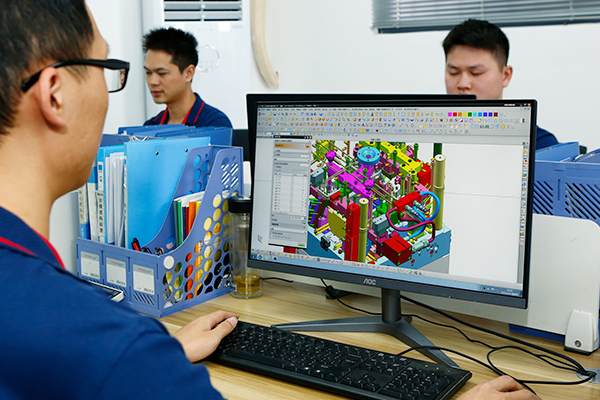
Die-casting mould manufacturing and rapid die-casting
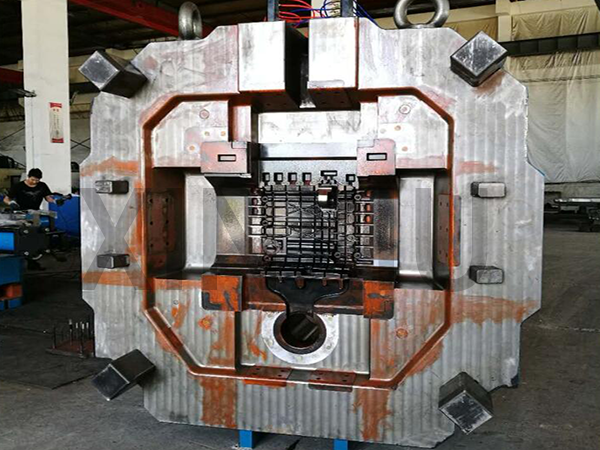
Aluminium Alloy Moulds and Die Casting
Aluminium die-casting is a core process in automotive lightweighting and the manufacture of 5G communication equipment. Xinshou possesses comprehensive manufacturing capabilities ranging from small precision moulds to large, complex 30-tonne automotive moulds. We have extensive experience in automotive housings, brackets, new energy battery casings, lightweight structural components, as well as 5G heat dissipation enclosures and filter housings, and specialise in the design and analysis of automotive and 5G communication moulds. We are equipped with 10 die-casting machines ranging from 100 tonnes to 4,000 tonnes, all fitted with robotic arms and auxiliary automation equipment. Each machine is equipped with a process control system that monitors performance in real time and ensures production consistency. With our highly skilled manufacturing team and rigorous quality control processes, we provide our customers with high-quality aluminium alloy die-casting solutions.
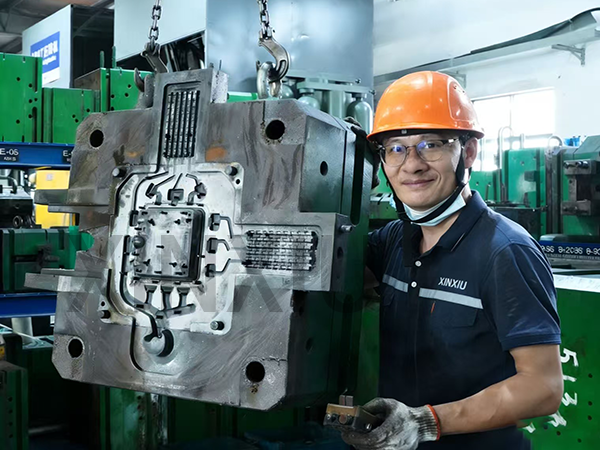
Magnesium Alloy Moulds and Die Casting
Magnesium alloy is renowned as the lightest structural metal, but it is prone to oxidation and has high fluidity, placing extremely high demands on moulds. XINXIU has specialised in magnesium alloy die casting for over a decade, utilising heat-resistant mould steel and vacuum-assisted processes to effectively address the challenges of magnesium alloy die casting. The company possesses extensive experience in sectors such as steering wheel frames, instrument panel brackets, laptop casings, mobile phone mid-frames and power tool housings. With advanced equipment, professional manufacturing capabilities and a team of highly trained technical engineers, we guarantee the long service life and high stability of our magnesium alloy moulds and castings, helping our clients achieve high-quality, efficient manufacturing.

Cost Optimization Analysis
Our technical team works closely with clients to conduct a comprehensive evaluation of the entire process—from material selection, structural optimization, and mold design to post-processing—to identify opportunities for cost reduction and achieve the most competitive pricing while ensu

Dedicated Team
Each project is assigned a cross-functional team comprising manufacturing engineers, technical project managers, quality engineers, mold engineers, and logistics supervisors. This team works in close coordination throughout the entire process to ensure efficient project execution.

Comprehensive Quality System
We strictly adhere to APQP, PPAP, scientific molding process control, full-process mold inspection, and automated production to ensure every step is controllable and traceable.