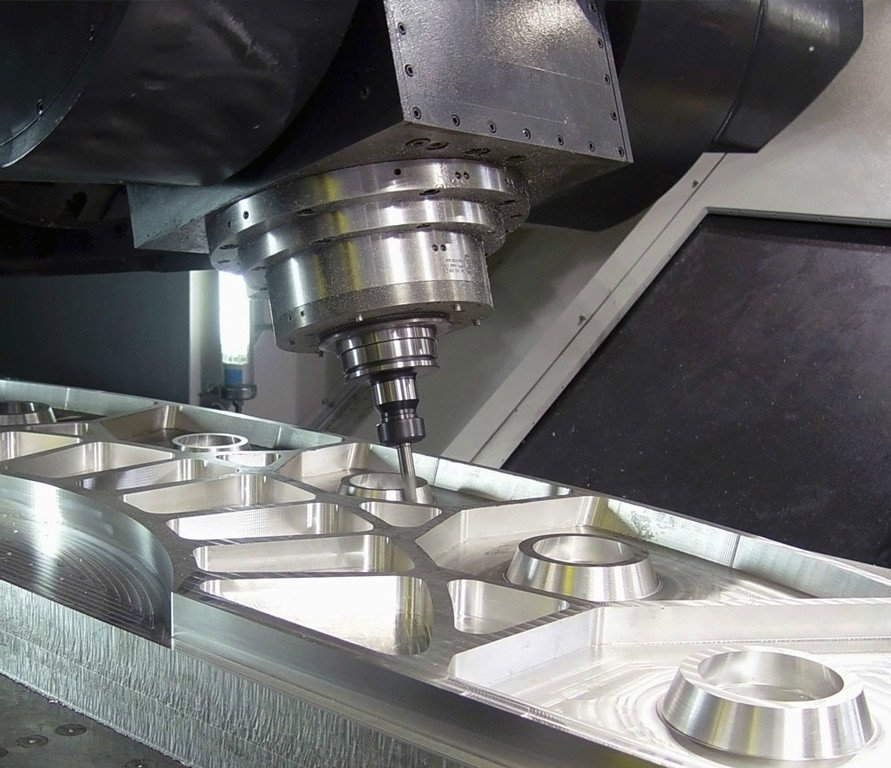
In the fast-paced world of tech hardware, the transition from a finalized CAD model to a market-ready component is a critical bottleneck. Industries such as semiconductor equipment, medical robotics, and automated aerospace systems do not just require mass production; they demand extreme precision, rapid iterative flexibility, and zero-defect reliability.
For international procurement professionals, overseas sourcing must be frictionless. The focus has shifted from simple labor-cost arbitrage to technical agility. This blog explores how modern precision CNC machining, advanced surface engineering, and agile manufacturing frameworks can accelerate your product development lifecycle.
1. Mastering High-Mix, Low-Volume (HMLV) Manufacturing
Modern high-tech industries rarely require millions of the exact same part. Instead, the trend has shifted toward High-Mix, Low-Volume (HMLV) production—manufacturing a wide variety of complex parts in smaller, specialized batches.
Traditional CNC Setup: Long Setup Time ──> Massive Batch (Low Flexibility)
Agile HMLV Setup: Quick-Change Tooling ──> Small, Iterative Batches (High Flexibility)
Managing an HMLV workflow requires a sophisticated operational framework. We solve this bottleneck through:
- SMED (Single-Minute Exchange of Die) Methodologies: We reduce machine downtime by standardizing setup procedures and utilizing quick-change fixture systems.
- Modular Workholding: By implementing zero-point clamping systems, we can switch from machining a medical titanium housing to a semiconductor aluminum manifold in minutes, rather than hours.
This operational agility means overseas buyers can order exactly what they need, minimizing inventory holding costs and allowing engineering teams to implement design changes between batches without facing massive financial penalties.
2. Ultra-Precision Tolerances and Surface Integrity
As microelectronics and optical devices shrink, the tolerances required from CNC milling services and CNC turning have pushed into the realm of single-digit micrometers. Achieving a tight tolerance on a blueprint is one thing; maintaining surface integrity across a production run is another.
Sub-Micron Precision and GD&T
We routinely work with tolerances as tight as ±0.002mm for critical aerospace and optical components. Our engineers strictly apply Geometric Dimensioning and Tolerancing (GD&T) principles to ensure that features like cylindricity, concentricity, and true position align perfectly with mating components, eliminating assembly-line friction for our clients.
Advanced Surface Finishing
A machined part is rarely complete right out of the machine. Surface finishes affect friction, wear resistance, electrical conductivity, and aesthetics. Our comprehensive in-house post-processing includes:
- Type III Hardcoat Anodizing: Provides extreme wear resistance and dielectric properties for aluminum components used in harsh environments.
- Electropolishing & Passivation: Crucial for medical-grade stainless steel (like 316L) to remove free iron from the surface and maximize corrosion resistance.
- Bead Blasting & Chemical Etching: For uniform, non-reflective matte finishes required in optical and laser housings.
3. The Semiconductor and Medical Mandate: Cleanliness and Compliance
Sourcing parts for the semiconductor (front-end wafer processing) and medical device sectors requires an understanding of strict contamination protocols. Even a microscopic trace of machine oil or airborne dust can ruin a multi-million dollar silicon wafer or compromise a surgical tool.
Our Contamination Control Protocol:
1.Ultrasonic Cleaning: All finished parts undergo multi-stage ultrasonic cleaning cycles using deionized water to remove all traces of cutting fluids and particulate matter.
2.Cleanroom Packaging: High-purity components are vacuum-sealed in a controlled environment to ensure they arrive at your facility ready for immediate cleanroom assembly.
By addressing these stringent compliance and cleanliness requirements during the manufacturing phase, we eliminate the need for secondary cleaning processes upon import, saving our clients time and reducing the risk of component rejection.
4. Digital Supply Chain Transparency for Overseas Buyers
Managing an offshore manufacturing project can introduce anxieties regarding communication barriers and visible tracking. To bridge this gap, we have digitized our customer touchpoints to provide a transparent, real-time experience.
- Live Project Tracking: Our integrated ERP system allows us to provide international clients with accurate, data-backed production updates at every stage—from material sourcing to final inspection.
- Cloud-Based DFM Collaboration: When design adjustments are required, our engineering team shares annotated 3D models via secure cloud platforms, enabling real-time, asynchronous design-for-manufacturing (DFM) reviews that compress approval times from days to hours.
Conclusion: Accelerating Your Innovation Pipeline
Choosing a CNC machining vendor is an investment in your product’s time-to-market and overall quality. Our facility combines multi-axis technical capabilities, rigorous quality assurance, and agile production methodologies to serve as a seamless extension of your engineering team.
Ready to streamline your next hardware project? [Upload your CAD files today] to receive a technical DFM analysis and a comprehensive, transparent quote from our engineering specialists.