In the global manufacturing landscape, the criteria for selecting an injection molding partner have shifted. It is no longer just about the “lowest price per part.” For OEMs in the automotive, medical, and aerospace sectors, the focus is now on long-term dimensional stability and process reliability.
At our facility, we don’t just “mold parts.” We engineering solutions using Scientific Molding principles. This data-driven approach ensures that the first shot is identical to the millionth, regardless of environmental variables.
1. Beyond the “Trial and Error” Method
Traditional injection molding relies heavily on the operator’s intuition. However, high-performance engineering resins like PEEK, PPS, or thin-walled PA66 require a more rigorous approach. Scientific molding focuses on the physics of the plastic, not just the settings on the machine.
- Viscosity Study: We establish the optimal injection speed to ensure the melt maintains a stable shear rate, preventing internal stress.
- Gate Freeze Study: By precisely identifying when the gate solidifies, we ensure the packing pressure is applied for the exact duration needed. This eliminates common defects like sink marks and weight fluctuations.
2. Advanced Tooling: The Foundation of Quality
A high-quality part starts with a superior mold. Our DFM (Design for Manufacturing) process goes deeper than basic draft angles:
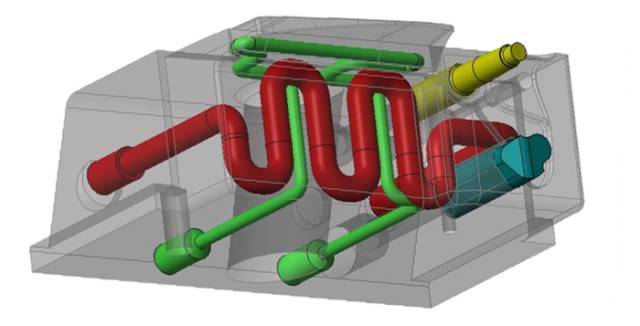
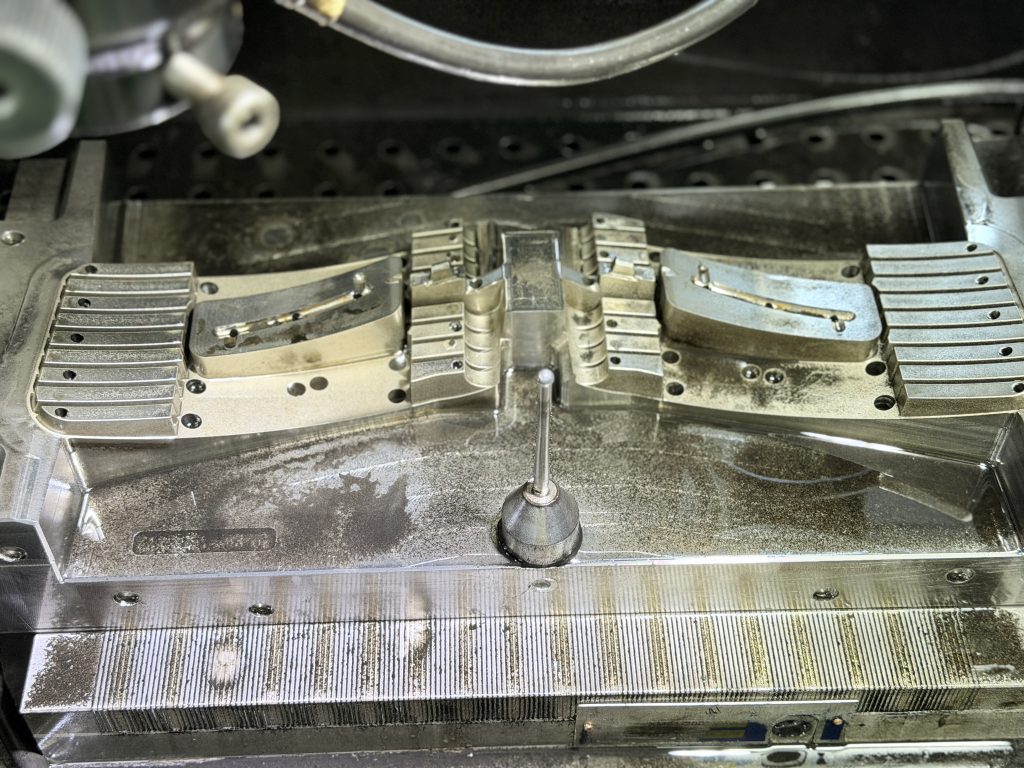
- Conformal Cooling: For complex geometries, we utilize 3D-printed mold inserts with conformal cooling channels. This allows the coolant to follow the exact contour of the part, reducing cycle times by up to 20% and significantly minimizing warpage.
- Scientific Venting: Improper venting leads to gas burns and short shots. We calculate venting placement based on the last-to-fill areas identified in Moldflow simulations, ensuring a pristine surface finish every time.
3. Material Integrity and Moisture Control
For hygroscopic materials like PC or Nylon, even 0.05% moisture can lead to polymer degradation and mechanical failure. We employ advanced desiccant dryers and conduct moisture analysis before every production run. In the world of high-end export, “good enough” is never enough.
4. Future-Proofing: Sustainability in Molding
With the global push toward ESG, we are helping our clients transition to PCR (Post-Consumer Recycled) resins and Bio-based materials. Our closed-loop control systems automatically compensate for the MFI (Melt Flow Index) fluctuations typical of recycled resins, ensuring that sustainability does not come at the cost of performance.