
Liquid silicone rubber injection moulding
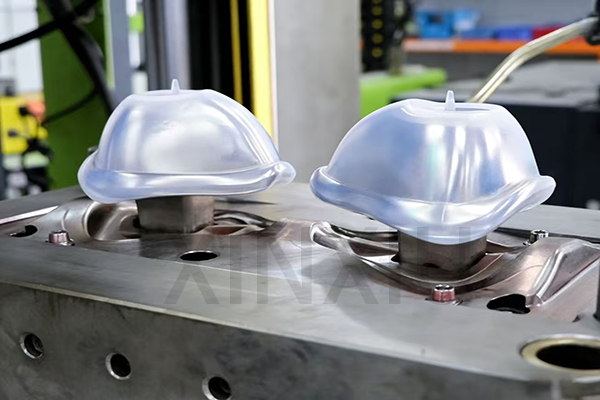
We specialise in the development and manufacture of high-quality liquid silicone rubber (LSR) moulded parts, offering a comprehensive range of bespoke services from product concept and design validation through to prototype development and mass production, to meet the industry’s stringent requirements.
LSR injection moulding enables the high-precision production of micro-walled and thin-walled parts, with products exhibiting excellent biocompatibility and optical clarity. Combined with overmoulding technology, it is widely used in the automotive, medical, electronics, optical and other industries.
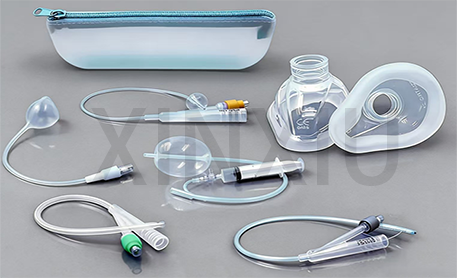
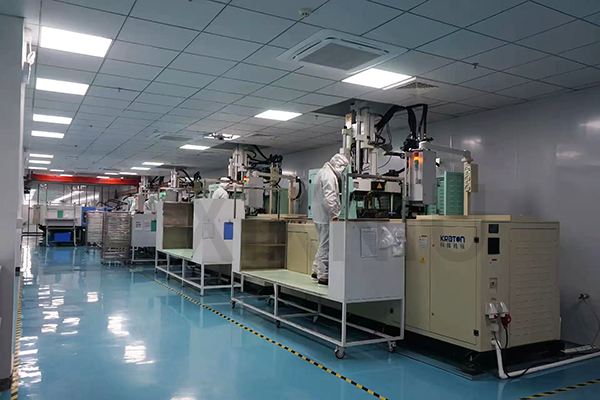
LSR Injection Moulding
We offer professional liquid silicone rubber (LSR) injection moulding services, utilising advanced equipment and cold runner technology to achieve high-precision, high-efficiency mass production.
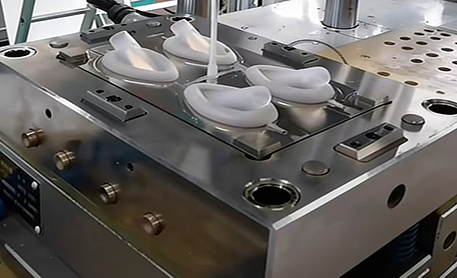
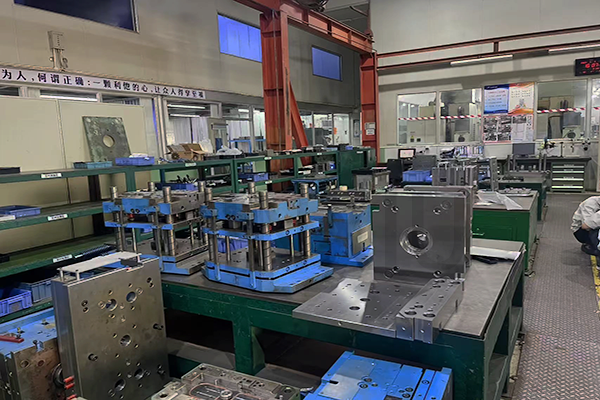
LSR Mould Manufacturing
We specialise in the design and manufacture of LSR injection moulds, optimising cold runner systems, venting structures and temperature control designs to suit the material’s properties, ensuring mould precision and durability.
Our LSR molding process
From concept to production, we ensure quality and precision at every step
| Step 1: Material Preparation | The two components of liquid silicone rubber (base material and catalyst) are precisely measured and thoroughly mixed in a static mixer to ensure they are fully combined, laying the foundation for subsequent curing. |
| Step 2: Injection Moulding | The mixed LSR is injected into the heated mould cavity under high pressure, rapidly filling the cavity and curing instantly to form the desired part shape. |
| Step 3: Vulcanisation | The heated mould activates the platinum-catalysed curing reaction, transforming the liquid material into a solid elastomer. This process typically takes 15–90 seconds, with the exact duration depending on the part’s geometry, wall thickness and material properties. |
| Step 4: Ejection | Once curing is complete, the mould opens automatically, and precision ejector pins gently push the finished part out of the mould cavity. This process ensures the part is subjected to minimal stress, preventing deformation of thin-walled or complex structures. |
| Step 5: Post-Processing | Depending on the specific application requirements, parts may undergo secondary processing, including deburring and flash removal, assembly with other components, surface marking, or additional curing to stabilise material properties. |
| Step 6: Quality Inspection | Every component undergoes rigorous quality inspection, including verification of dimensional accuracy, visual inspection for surface defects, and functional performance testing, to ensure that all products leaving the factory meet specification requirements. |
All uploads are secure and confidential
Design Considerations for LSR Injection Moulding
- 1. Shrinkage Control
- LSR typically exhibits a shrinkage rate of 2.5%–3% after demoulding and cooling; post-curing may add an additional 0.5%–0.7%. Shrinkage is greater in the flow direction than in the perpendicular direction, and thick-walled parts shrink less than thin-walled parts. When designing moulds, shrinkage allowances must be provided based on the part wall thickness and flow direction.
- 2. Parting Line and Vent Design
- As LSR has extremely low viscosity, parting lines must be precisely sealed to prevent material overflow. Venting grooves should be positioned in the area where the material reaches last, with a width of 1–3 mm and a depth controlled at 0.004–0.005 mm. It is recommended to use mould vacuum venting, or to switch to high pressure after filling 90%–95% at low pressure, to avoid the formation of bubbles.
- 3. Gate and Runner System
- Cold runner systems are recommended for LSR, with effective thermal isolation between the hot cavity and the cold runner. The gate diameter is typically 0.2–0.5 mm and should be positioned on a non-visible surface. Titanium alloy materials may be used to provide thermal insulation between the hot and cold ends.
- 4. Ejection Mechanism Design
- As LSR possesses high tear strength at elevated temperatures, ejection pins, ejection plates or gas-assisted ejection may be employed. The ejection system requires high precision; excessive clearance may result in flash. Tapered or mushroom-shaped ejector pins provide better sealing and prevent material from seeping into the ejection mechanism.
- 5. Selection of Mould Materials
- Cavity materials must withstand temperatures of 170°C–210°C. Chrome-plated steel or powder metallurgy steel is recommended for highly filled LSR; polished steel is required for transparent products; titanium/nickel steel offers high wear resistance, whilst PTFE/nickel coatings facilitate demoulding.
- 6. Temperature Uniformity Control
- Mould temperature must be distributed uniformly; electric heating is typically employed. Heaters should be positioned at a distance from the parting line to prevent mould plate deformation, which could lead to material overflow. In cold runner moulds, the hot and cold ends must be completely thermally isolated to ensure low temperatures in the runners and high temperatures in the cavities.
Processing equipment
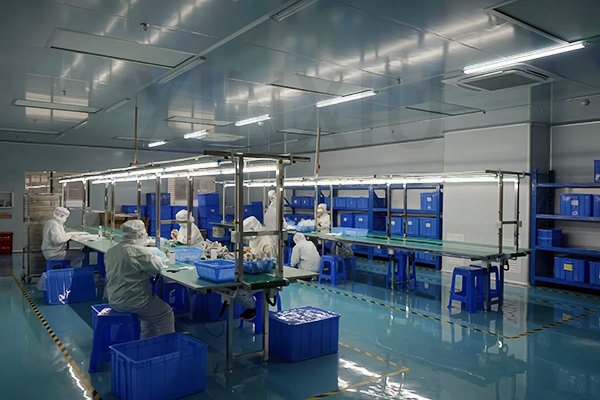
Liquid Silicone Rubber Moulding of application
Thanks to its excellent material properties, high-precision replication capabilities and process advantages suited to large-scale production, liquid silicone rubber injection moulding is widely used in the following fields:

Healthcare

Car parts

Maternity, baby and personal care

Consumer Electronics

Home Appliances